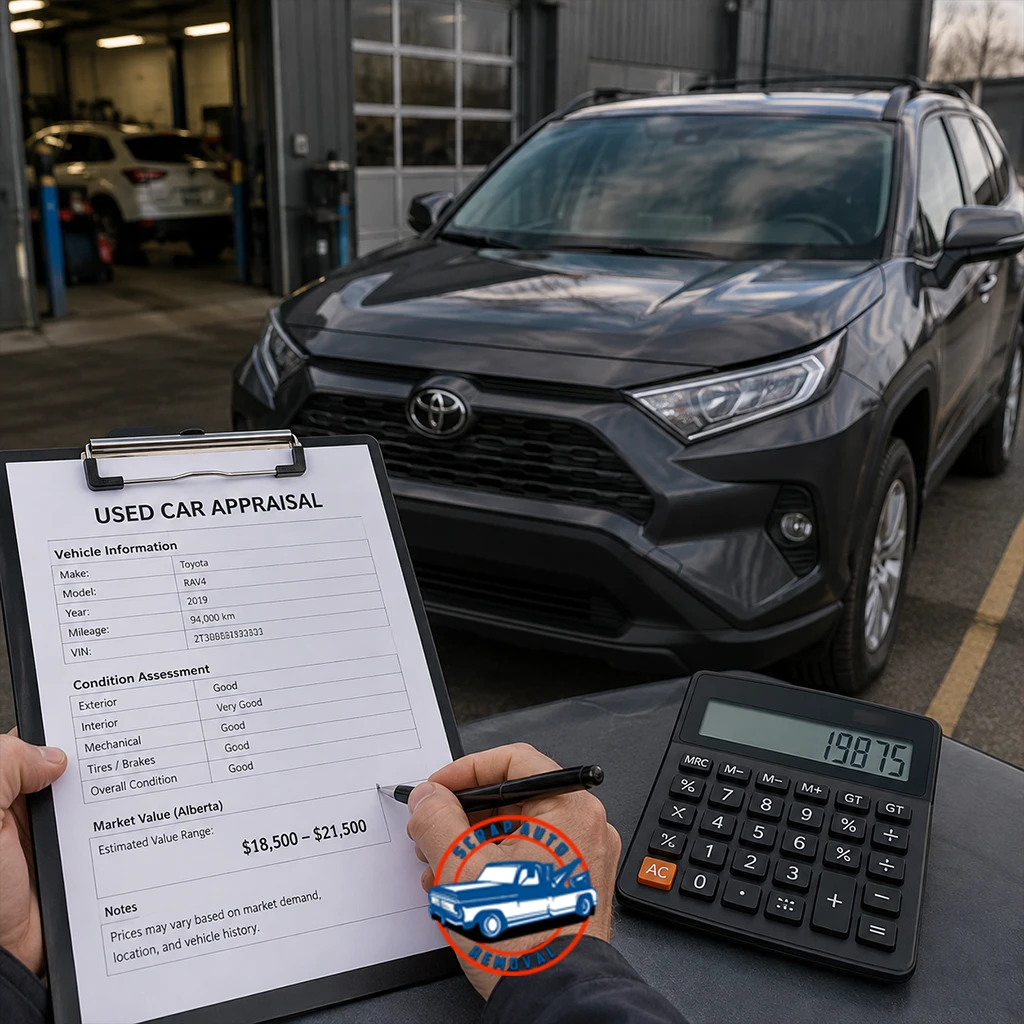

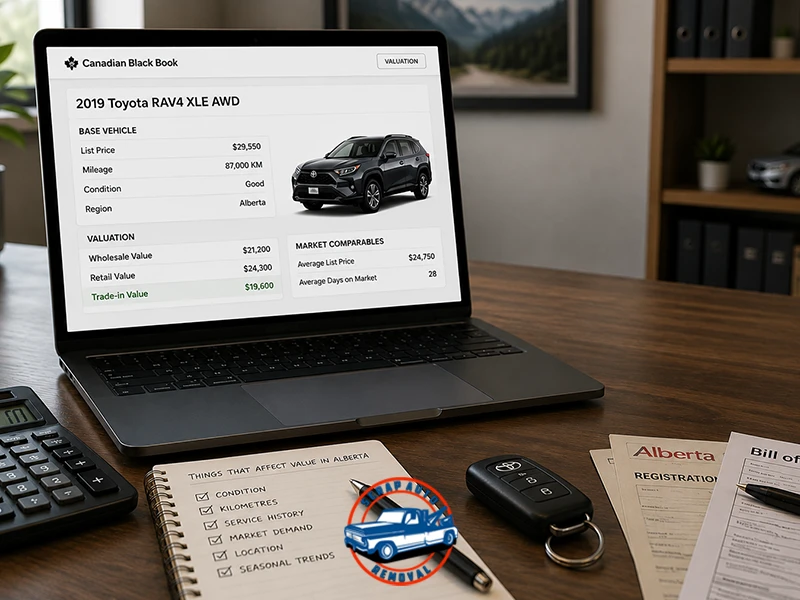
The tools used to value a car in Alberta are the same ones used everywhere else in Canada, Canadian Black Book, AutoTrader’s valuation tool, dealership appraisals. What’s actually different is what happens to that number once you act on it, because Alberta’s tax structure is simpler than most other provinces, and that simplicity changes what a seller actually needs to think about compared to somewhere with layered provincial taxes. A number that looks identical on paper in Alberta and British Columbia can involve a different amount of tax paperwork once you factor in how each province handles the sale.
This guide covers what’s genuinely different about valuing and selling a car here, not just the standard valuation methods everyone already knows about.
Have a Vehicle Where None of This Math Applies Anyway?
If your vehicle is non-running, damaged, or otherwise not fit for a standard trade-in or private sale, the tax and valuation questions above don’t really apply, condition-based value takes over instead. Scrap Auto Removal serves Calgary and more than 30 Alberta communities with real, condition-based quotes for exactly these vehicles. Get a quote or email [email protected] for a free assessment.
Does Alberta Have Its Own Valuation Standard?
No. The underlying tools, guidebook values, market comparables, algorithmic estimates, work the same way across the country. A Canadian Black Book estimate or an AutoTrader valuation pulls from national data regardless of which province you’re in. What changes in Alberta isn’t how the number gets calculated, it’s what that number is actually worth to you once tax, registry rules, and regional demand come into play. Those factors sit on top of the valuation, not inside it, which is why the same estimate can play out slightly differently depending on where you live.
What Alberta's Lack of PST Actually Means
Alberta is the only province in Canada with no provincial sales tax. Vehicle purchases here are subject only to the 5 percent federal GST, with no additional provincial layer on top.
It’s worth being precise about what this does and doesn’t change. Trading in a vehicle at a dealership still reduces the GST you pay on the new purchase, the CRA taxes dealership sales on the net amount after a personal trade-in is deducted, and that federal GST rule applies the same way in Alberta as it does anywhere else in the country. What Alberta’s missing isn’t a trade-in benefit, it’s an entire extra tax layer that other provinces have to account for. A buyer in British Columbia or Saskatchewan deals with GST plus a separate PST calculation, sometimes with its own rules about how trade-ins factor in. An Alberta buyer only ever deals with the 5 percent GST, full stop, which makes the math simpler even though the underlying trade-in mechanics work the same way.
A Worked Example: Trade-In vs. Private Sale in Alberta
Numbers make this easier to see in practice. Say you’re buying a $30,000 vehicle from a dealership and trading in a car worth $8,000.
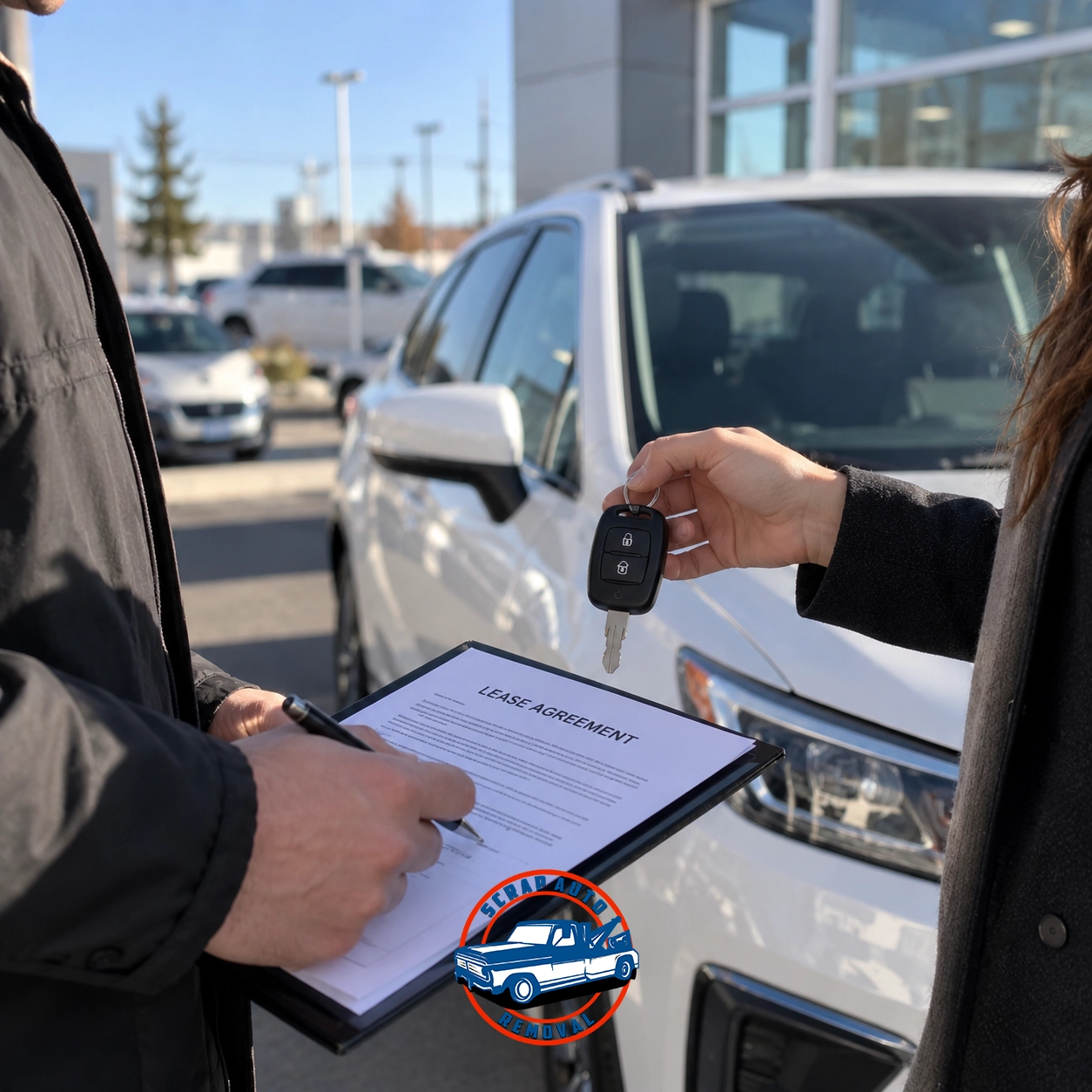
- Trading in at the dealership: GST applies to the net amount, $30,000 minus the $8,000 trade-in, so you’re taxed on $22,000. At 5 percent, that’s $1,100 in GST, and you walk away with the new vehicle and no separate transaction to manage for your old one.
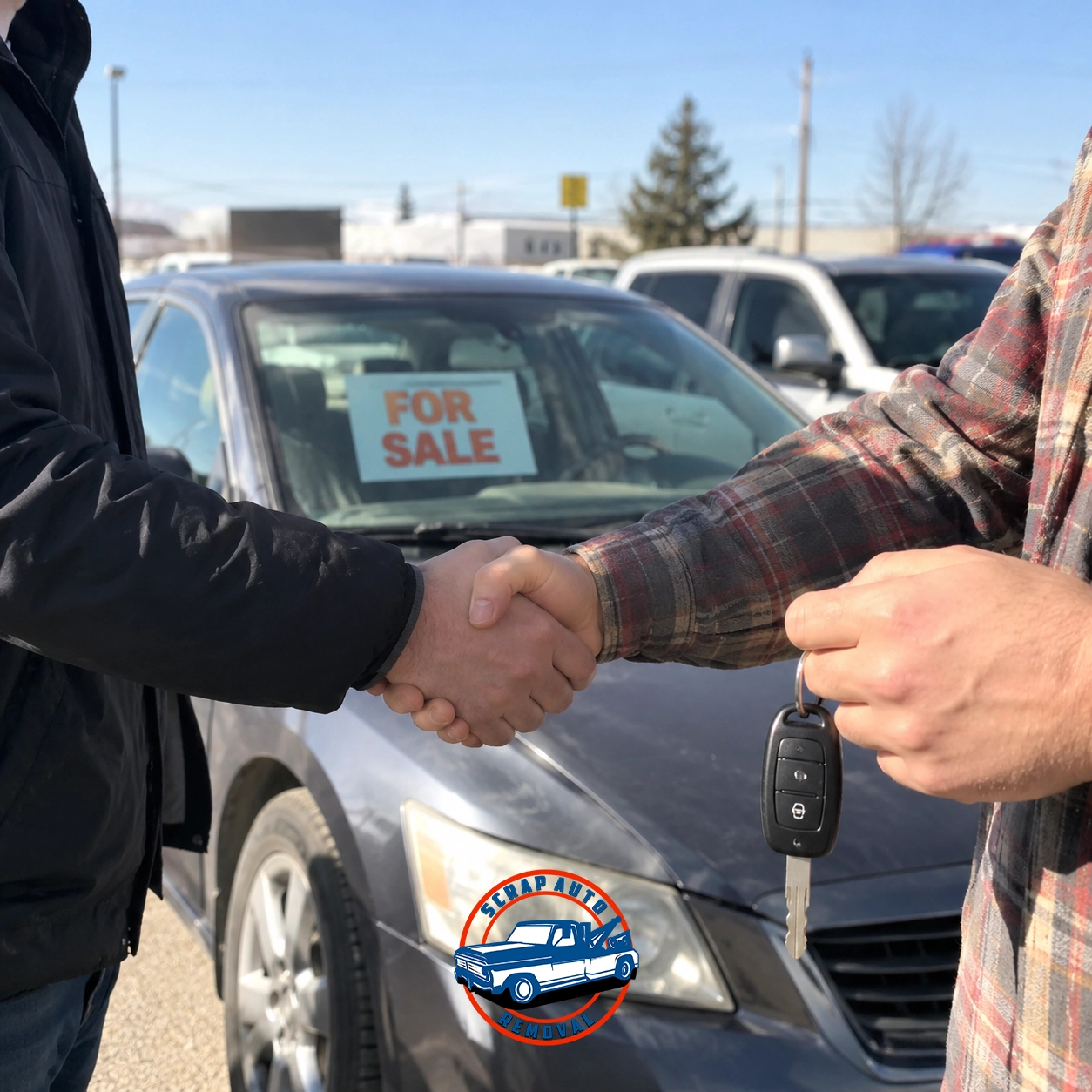
- Selling privately, then buying the new vehicle outright: If you sold that same $8,000 car privately first, no GST applies to that sale at all. You’d then pay GST on the full $30,000 purchase price, since there’s no trade-in netting it down, working out to $1,500 in GST. On the surface, that looks like trading in saves you $400 in tax. But private sale often brings a higher price for the vehicle itself than a dealership’s trade-in offer would, since the dealer needs margin to resell it. If your private sale nets even a few hundred dollars more than the trade-in offer, it can offset or exceed that tax difference entirely.
This is really a case-by-case calculation rather than a rule that favors one method universally, and it’s worth running your own numbers rather than assuming either option is automatically better.
- Read Also:
Why Private Sale Still Has a Clear Tax Advantage
According to the Canada Revenue Agency, GST/HST generally does not apply to a private vehicle sale at all, regardless of province. In Alberta, that means a private sale is essentially tax-free on both sides, no GST for the buyer, and no PST to think about since it doesn’t exist here. That’s true in every province to some degree, since private sales are broadly GST-exempt everywhere, but Alberta sellers get the full benefit of that exemption without a separate provincial private-sale tax sitting on top of it, which some other provinces do apply at registration. The gap between “sell privately” and “trade in at a dealership” exists everywhere, but in Alberta it’s a clean, single-tax comparison rather than one complicated by a second provincial calculation.
What Happens When You Buy a Vehicle From Another Province?
This comes up more than people expect, especially given how many Albertans relocate from or purchase vehicles in neighboring provinces. If you buy a vehicle in a province with HST and bring it into Alberta, you may be eligible for a rebate on the provincial portion of the HST you paid, provided the vehicle is brought into Alberta within a specific window after delivery and you meet the CRA’s other conditions. This is a real, sometimes overlooked opportunity, since people assume once HST is paid, it’s paid for good. If you’re valuing a vehicle you’re planning to bring into Alberta from an HST province, it’s worth checking whether that rebate applies before finalizing your budget around the purchase price alone.
What AMVIC's Role Means for Valuation
AMVIC licenses and regulates vehicle dealers in Alberta, and that licensing has a real bearing on how much you should trust a dealer’s stated trade-in value. Licensed dealers operate under Alberta’s Consumer Protection Act and AMVIC’s code of conduct, which means there’s an actual regulatory body you can check with if a valuation or transaction feels off. A private appraisal or an unlicensed seller doesn’t carry that same layer of accountability.
This doesn’t mean dealer trade-in numbers are automatically more accurate, they still factor in resale margin the same way dealers do everywhere, but it does mean there’s a verification step available in Alberta specifically worth using if you want to confirm you’re dealing with a legitimate business before trusting their number.
We see the value of this licensing check firsthand when assessing vehicles that came out of a trade-in deal the owner wasn’t fully confident in, a quick AMVIC lookup before agreeing to anything would have saved a fair number of Alberta sellers from wondering afterward if they got a fair shake.
Regional Demand Within Alberta
| Alberta & Snow-Heavy Regions | National Average | |
|---|---|---|
| Driving conditions | Winters and rural distances favour AWD, 4x4, and trucks | Less shaped by winter or rural driving |
| AWD / 4x4 / Trucks | Tend to hold value better locally | Only reflects a generic number |
| Compact sedan | May price slightly below the national estimate | Baseline estimate |
| Well-equipped truck | Can hold value at or above the national number | Baseline estimate |
| Bottom line | A national average won't always reflect what a vehicle is actually worth to an Alberta buyer | Same pattern holds across other snow-heavy Canadian regions |
Steps to Get an Accurate Valuation and Sell With Confidence in Alberta
- Start with an online valuation tool for a ballpark, but treat it as a starting point rather than a final number, especially for anything older or less common.
- Run the trade-in versus private sale math yourself, using your actual numbers rather than assuming one route is automatically better.
- Check the dealer’s AMVIC licensing if you’re considering a trade-in, so you know there’s regulatory backing behind the offer.
- Factor in vehicle type, since trucks and AWD vehicles may be worth more locally than a national estimate suggests.
- Confirm any applicable rebate if the vehicle came from an HST province, before finalizing your budget.
What This Means If You're Deciding Between Trade-In and Private Sale
Pulling the tax and regulatory pieces together, a few things are worth weighing specifically as an Alberta seller:
- A private sale avoids GST on both sides, a real, immediate saving compared to a dealership transaction, and Alberta sellers get that benefit without a second provincial tax to consider.
- A dealership trade-in still reduces your GST on the net amount, the same as anywhere else in Canada, so that part of the math isn’t actually different here.
- The overall tax picture is simply less complicated in Alberta, since there’s only one tax rate to think through instead of two.
- A licensed dealer’s number carries regulatory backing, which matters if you’d rather have that layer of protection.
- Vehicle type matters more here than a national average suggests, particularly for trucks and AWD vehicles.
None of this changes how the valuation itself is calculated, but it does change what that number should mean to you as you decide how to actually sell.
Frequently Asked Questions
No, the same national tools like Canadian Black Book and AutoTrader are used here too. What differs is Alberta's tax structure, since there's no provincial sales tax, which makes the overall tax picture simpler than in provinces with a separate PST calculation to factor in.
Generally, no. According to the CRA, GST/HST does not apply to most private vehicle sales, and since Alberta has no provincial sales tax, a private sale here is effectively tax-free for both the buyer and seller in most situations.
Yes, the same way it does across Canada. GST is calculated on the net amount after your trade-in value is deducted from the new vehicle's price, and Alberta doesn't add a separate provincial tax layer on top of that calculation, unlike some other provinces do.
Not necessarily more accurate, but it comes with more accountability. Licensed dealers operate under AMVIC and Alberta's Consumer Protection Act, giving you a regulatory body to reference and complain to, which an online tool or a private appraisal simply doesn't offer.
Vehicle type matters more than exact location. Trucks and AWD vehicles tend to hold value well across Alberta due to winter driving conditions and rural distances, sometimes above what a generic national valuation estimate would otherwise suggest for that same vehicle.
You can check a business's licensing status directly through AMVIC, Alberta's regulatory body for vehicle dealers, using their online lookup tool. Confirming this before accepting a trade-in offer protects you and gives you recourse if a dispute comes up later on.
The Conclusion
Valuing a used car in Alberta uses the same national tools as everywhere else, and the underlying trade-in tax mechanics work the same way here as they do across the country. What’s genuinely different is that Alberta sellers and buyers only ever deal with one tax rate instead of two, which makes the overall picture simpler, not fundamentally different. Running the actual numbers on trade-in versus private sale matters more than assuming either option wins by default, and AMVIC’s licensing gives you a way to verify a dealer’s credibility that a private appraisal doesn’t offer.
Regional demand for trucks and AWD vehicles can also move a specific vehicle’s real value above or below a generic national estimate. Knowing these Alberta-specific factors is what turns a standard valuation number into an actual, useful decision.
References
Sources
- Canada Revenue Agency – GST/HST and motor vehicles, private sale and dealership tax treatment
https://www.canada.ca/en/revenue-agency/services/tax/businesses/topics/gst-hst-businesses/charge-collect-specific-situations/motor-vehicles.html - Canada Revenue Agency – GST/HST in special cases, trade-in treatment
https://www.canada.ca/en/revenue-agency/services/tax/businesses/topics/gst-hst-businesses/charge-collect-special-cases.html - AMVIC (Alberta Motor Vehicle Industry Council) – vehicle condition disclosure and licensing verification
https://www.amvic.org/consumer/buying-a-vehicle/buying-used/ - AMVIC – general code of conduct and Consumer Protection Act obligations
https://www.amvic.org/about-us/laws-and-regulations/general-code-of-conduct/ - Canadian Black Book – vehicle valuation methodology
https://www.canadianblackbook.com/vehicle-values/
Have a Vehicle Where None of This Math Applies Anyway?
If your vehicle is non-running, damaged, or otherwise not fit for a standard trade-in or private sale, the tax and valuation questions above don’t really apply, condition-based value takes over instead. Scrap Auto Removal serves Calgary and more than 30 Alberta communities with real, condition-based quotes for exactly these vehicles. Get a quote or email [email protected] for a free assessment.