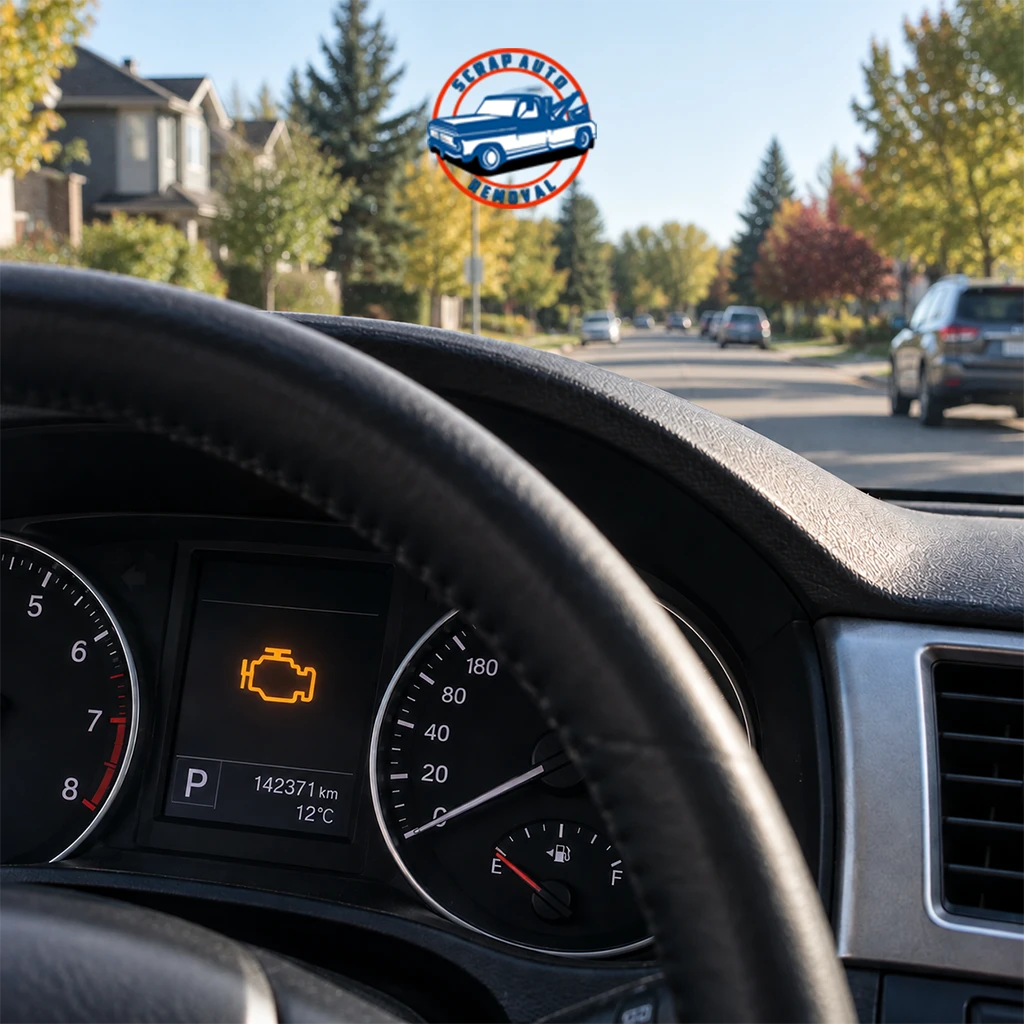

A lit check engine light triggers instant anxiety in most owners, and often for no real reason, since the light covers everything from a loose gas cap to a serious engine fault, with no way to tell which one you’re dealing with just by looking at the dashboard. That uncertainty is exactly what makes selling a car in this condition feel harder than it actually is. The good news: Alberta has no mandatory emissions testing program, which removes one entire category of worry that owners in some other provinces have to deal with.
This guide covers what the light actually means, how to figure out whether you’re facing a minor issue or a real one, and what your options are for selling either way.
Ready to Sell a Car With the Check Engine Light On?
Whether the cause turned out to be minor or something more involved, Scrap Auto Removal buys vehicles in any condition, check engine light included, without requiring repairs first. We serve Calgary and more than 30 Alberta cities. Get a quote or email [email protected] for a free, no-obligation quote.
Can You Legally Sell a Car With the Check Engine Light On in Alberta?
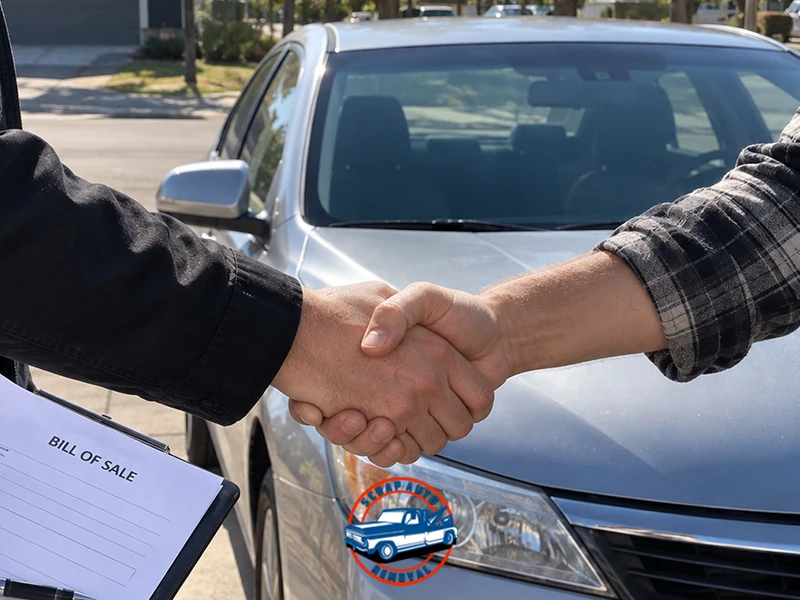
Yes. Alberta doesn’t require a private seller to provide a Mechanical Fitness Assessment, which is the inspection document licensed dealers must give buyers before selling a used vehicle. That requirement applies to licensed automotive businesses, not private individuals, so you can sell a car with check engine light on without anything blocking the private sale in any way.
What matters instead is disclosure: letting a buyer know the light is on and what you know, rather than clearing the code and hoping it doesn’t come back on before the sale closes. Being upfront about it protects you as well as the buyer, since a seller who’s honest about a known issue has much less exposure if a dispute ever comes up afterward.
- Read Also:
Is Clearing the Code Before Selling Considered Dishonest?
This comes up a lot, and it’s worth being direct about the distinction:
- Clearing a code after an actual repair: a normal, honest part of confirming the fix worked.
- Clearing a code specifically to hide a known, unresolved issue during a sale: misleading, and the light will likely return within a short drive anyway once the system re-detects the underlying fault.
If you genuinely don’t know why the light is on, getting it scanned first tells you what you’re actually dealing with, which is a very different situation than clearing it and hoping nobody asks.
Does Alberta Require an Emissions Test the Light Would Fail?
No. Alberta has never had a mandatory vehicle emissions testing program, so a check engine light doesn’t put you at risk of failing a government inspection here. This is one of the more reassuring facts in this whole topic, since a lot of the anxiety around selling a car with the check engine light on comes from assuming a testing requirement that simply doesn’t exist in this province. There’s no equivalent to a Drive Clean-style test tied to your registration renewal.
What Does the Check Engine Light Actually Mean?
The light is part of your vehicle’s onboard diagnostics system, and it comes on when the engine computer detects something outside normal parameters, anywhere from the engine and transmission to the emissions and fuel systems. It doesn’t tell you what’s wrong on its own, it tells a scan tool which stored code to look up, and that code narrows down the system involved without necessarily identifying the exact failed part.
This is why two vehicles with the same code can have completely different underlying problems, and why guessing based on the code alone, without an actual diagnosis, often misleads owners.
Steady vs. Flashing: Why the Difference Matters
- Steady light: indicates a fault that needs diagnosis, though the urgency depends on the underlying problem and whether the vehicle is showing other symptoms.
- Flashing light: typically signals an active engine misfire severe enough to risk damaging the catalytic converter. Stop driving as soon as it’s safe to do so, and get it looked at promptly rather than continuing your trip.
A severe misfire can send unburned fuel into the exhaust, potentially overheating and damaging the catalytic converter. What would have been a modest spark plug or coil repair can turn into a much larger catalytic converter replacement if you keep driving on a flashing light instead of pulling over. This is really the one situation in this entire topic where the light itself is telling you something urgent, rather than just “get this looked at eventually.”
If you’re selling a vehicle where the light has been flashing rather than steady, that’s also worth mentioning specifically to a buyer, since it changes the likely cause and cost involved compared to a steady light.
How Do You Find Out What's Actually Wrong?
An OBD-II scan tool retrieves the stored code. Some parts stores offer code-scanning services, though availability and cost vary by location. Getting an actual diagnosis, rather than guessing based on the code alone, is what prevents you from either overpaying for an unnecessary repair or underestimating a real problem that could get worse if ignored.
What Are the Most Common Causes?
| Cause | Potential severity |
|---|---|
| Loose or damaged gas cap | Usually minor |
| Oxygen sensor fault | Moderate |
| Catalytic converter fault | Potentially expensive |
| Engine misfire | Minor to severe |
| Mass airflow sensor problem | Moderate |
A loose, damaged, or missing gas cap is genuinely one of the simplest and cheapest possible causes, and it’s worth checking before assuming anything more serious. A failing oxygen sensor affects fuel efficiency and can eventually damage the catalytic converter if left unaddressed for too long.
Catalytic converter issues are sometimes a direct failure and sometimes a downstream effect of an oxygen sensor or engine misfire that was never fixed. Exact repair costs vary by shop and vehicle, but the pattern holds regardless: a gas cap issue is a minor fix, while a catalytic converter or a persistent misfire can represent a significant repair bill.
Does the Check Engine Light Affect Registration or Insurance?
An inspection is only required in specific registration-related situations:
- The vehicle was previously registered outside Alberta
- The vehicle carries a salvage brand
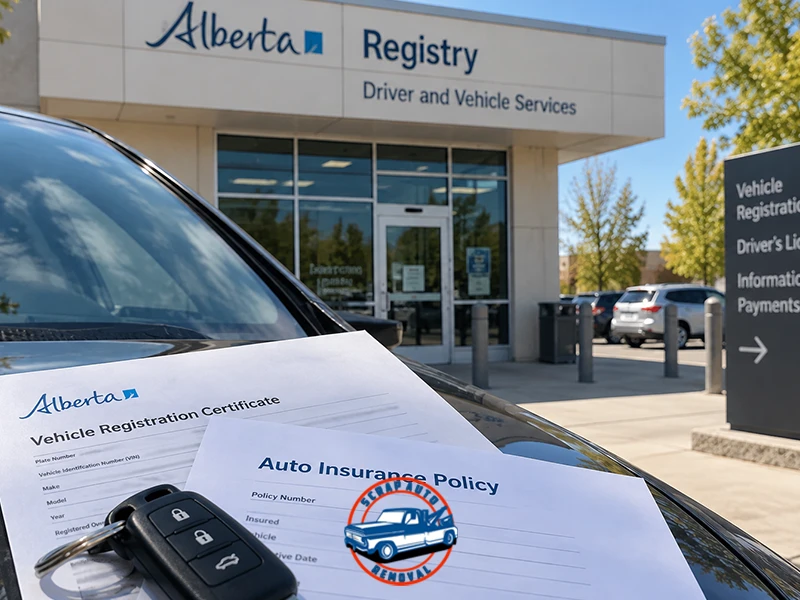
Neither of these is triggered by a check engine light itself. Separately, Alberta’s auto insurance rules include a Motor Vehicle Inspection Report specifically for insurance underwriting purposes, required for vehicles 12 years or older, regardless of whether the check engine light is on. This is an insurance requirement, not a registration one, and it applies purely based on the vehicle’s age. A check engine light isn’t itself a registration requirement, though insurance requirements can vary by vehicle and insurer, particularly for older vehicles that may already need that underwriting inspection for other reasons.
Does a Check Engine Light Lower a Car's Value?
A check engine light can reduce buyer confidence and lead to a lower offer even when the underlying repair is relatively inexpensive. A buyer who sees the light on has no way to know whether they’re looking at a $30 gas cap or a $1,000+ catalytic converter without a diagnosis of their own, and that uncertainty tends to make buyers more cautious across the board, not just about the specific issue at hand.
A dealer or private buyer may price more conservatively when the cause of the light hasn’t been diagnosed. This doesn’t mean every buyer walks away the moment they see it, most won’t, but expect it to come up in negotiation regardless of how minor the actual cause turns out to be once properly diagnosed.
- Read Also:
Should You Diagnose or Repair Before Selling?
Getting the code read is worth doing regardless of whether you plan to fix anything, since it’s typically low cost or free where available, and gives you real information to work with rather than a guess. Whether to go further and actually repair the issue depends on the same comparison that applies to any pre-sale repair: what it costs against what it’s likely to add back to the sale price. A cheap, confirmed fix, a gas cap, a straightforward sensor, is often worth handling before a private sale, since the cost is low and it removes an entire point of buyer hesitation.
A more involved repair on an older or lower-value vehicle frequently isn’t worth doing first, since the cost can exceed what it actually adds to the offer, the same pattern that applies to brake problems, oil leaks, and other known issues that come up when selling an older vehicle.
FAQs
Yes. Alberta doesn't require a private seller to provide a Mechanical Fitness Assessment before selling, so a lit check engine light doesn't block a private sale. Disclosing what you know about the light matters more than the light being on at all.
No, it won’t. Alberta has never had a mandatory vehicle emissions testing program. A check engine light doesn't put you at risk of failing a government inspection in Alberta, since no such program exists to fail in the first place.
It can be, if the underlying issue is still present. Clearing a code doesn't fix the cause, and the light typically returns within a short drive if the problem hasn't been repaired. Doing this specifically to hide a known issue is misleading.
Not directly for registration, which only requires inspections for out-of-province or salvage-branded vehicles. Separately, Alberta requires an insurance underwriting inspection for vehicles 12 years or older, based purely on age, not on whether the check engine light is on or not.
It can reduce buyer confidence and lead to a lower offer even when the underlying repair is relatively inexpensive. Buyers can't tell whether the issue is minor or serious without their own diagnosis, which tends to make them more cautious.
Yes. The light doesn't affect the value of the rest of the vehicle, and a direct cash buyer evaluates the car's actual condition rather than requiring it to be issue-free first, which removes the pressure to diagnose or repair anything beforehand.
Ready to Sell a Car With the Check Engine Light On?
Whether the cause turned out to be minor or something more involved, Scrap Auto Removal buys vehicles in any condition, check engine light included, without requiring repairs first. We serve Calgary and more than 30 Alberta cities. Get a quote or email [email protected] for a free, no-obligation quote.
The Bottom Line
Selling a car with the check engine light on in Alberta is legal, and unlike some other provinces, there’s no emissions test the light could cause you to fail. It isn’t a registration requirement either, though insurance requirements can vary by vehicle and insurer, particularly for older vehicles. The real question isn’t whether you can sell it, it’s whether you know what the light actually means before you do. A quick scan tells you which system is affected, and that information is worth having regardless of whether you decide to repair anything, since it lets you disclose accurately and avoid either overpaying for a fix or accepting a lower offer than the issue actually warrants.
References
Sources
- AMVIC (Alberta Motor Vehicle Industry Council) — consumer guidance on buying and selling used vehicles
https://www.amvic.org/consumer/buying-a-vehicle/buying-used/ - Government of Alberta — Insurance forms, Automobile Insurance Motor Vehicle Inspection Report (FSRP11463)
https://www.alberta.ca/insurance-forms - Alberta Municipalities — Mandatory Vehicles Emissions Testing resolution, provincial emissions testing history
https://www.abmunis.ca/resolution/mandatory-vehicles-emissions-testing - Government of Alberta — Register a vehicle in Alberta, registration and insurance requirements
https://www.alberta.ca/register-vehicle - Government of Alberta — Standard bill of sale
https://www.alberta.ca/standard-bill-sale