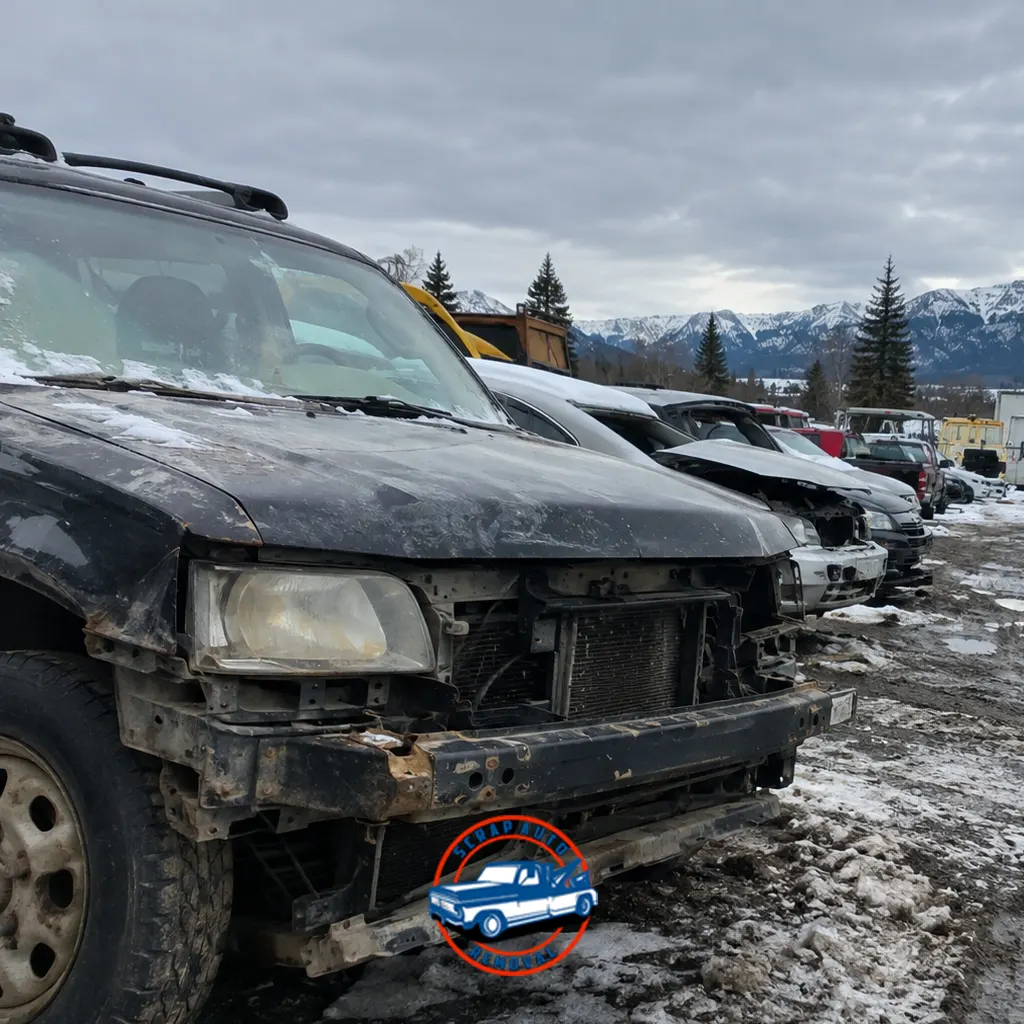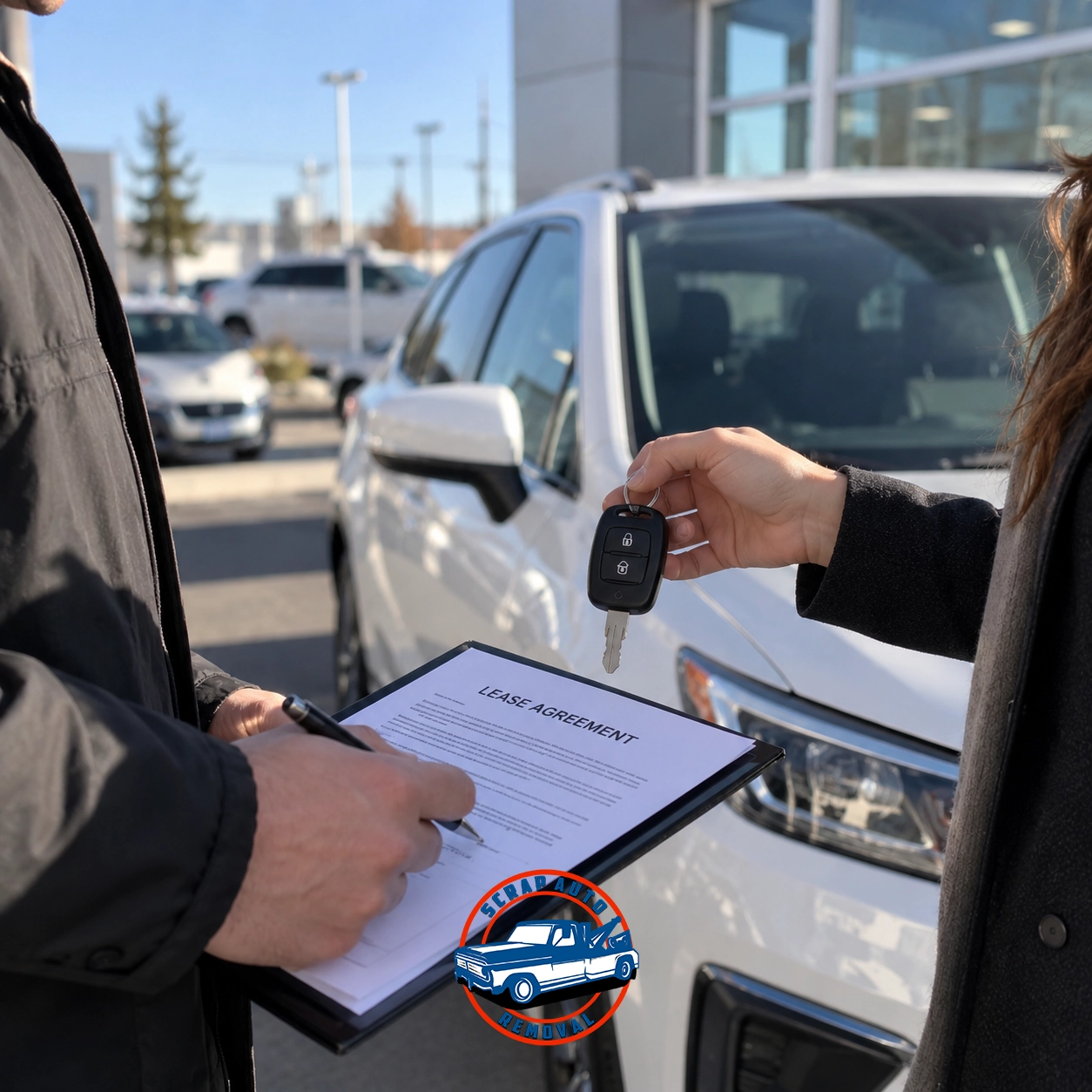

Picture a Calgary driver telling a buyer that her collision-damaged SUV is scrap. The registry record says salvage, and that status comes with rules a scrap sale doesn’t have. Mix-ups like this are common because the scrap car vs salvage car question blends a market label with a legal one. Salvage is a legal status set by provincial regulation, while scrap describes a vehicle whose metal and parts are its main value. Confusing the two can slow a sale, skew an offer, or leave required notices unfiled. This guide explains how Alberta treats each label, what happens to a vehicle’s record after a sale, and how to work out which category yours falls into before you contact a buyer, so the offer you accept holds up.
Not Sure If Your Car Is Scrap or Salvage? Get a Quote Either Way
Scrap Auto Removal buys vehicles in any condition, from older scrap cars to salvage-status vehicles. Call (587) 355-1464 or email [email protected] with the year, make, model and damage, and we’ll quote the vehicle as it is.
What's the Difference Between a Scrap Car and a Salvage Car in Alberta?
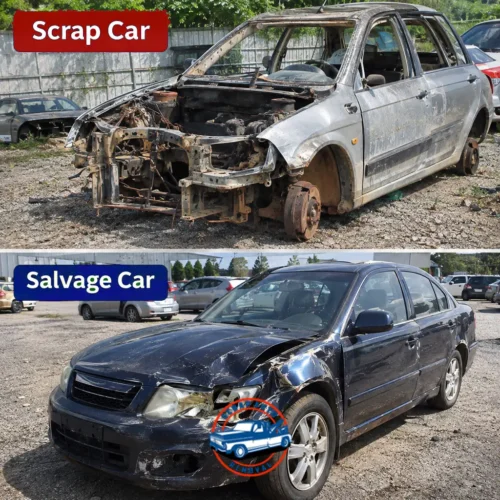
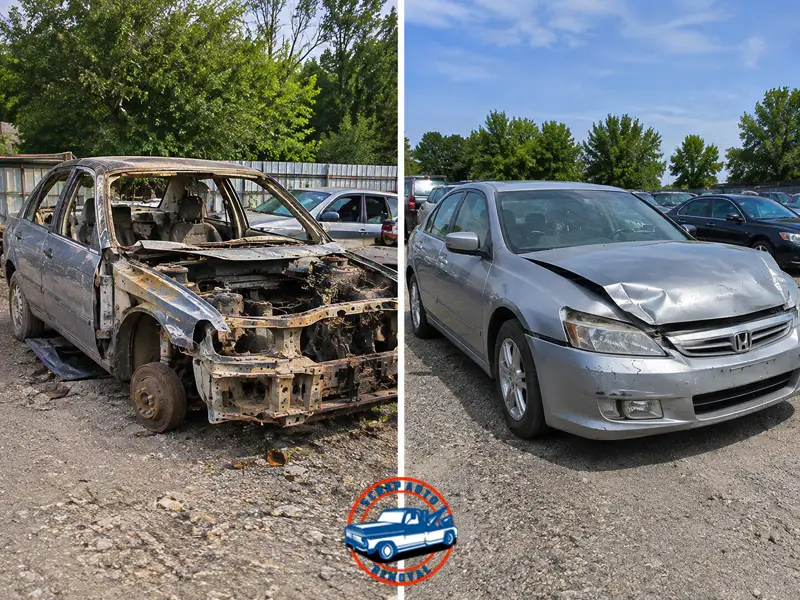
A salvage car is a vehicle that Alberta’s Vehicle Inspection Regulation classifies as salvage, most often because an insurer paid out on the damage, and it can’t be registered again until it passes a Salvage Vehicle Inspection. A scrap car is an informal market label for a vehicle that’s valued mainly for its metal and reusable parts. The labels overlap, but they aren’t interchangeable. A 20-year-old sedan with a seized engine can be scrap while holding a normal active registration. A late-model crossover can be salvage and still be attractive to a rebuilder. Alberta also recognizes a third category, non-repairable, for salvage vehicles with no resale value except as parts or scrap metal.
In our experience, most sellers use these words loosely, and that’s fine in a phone call. The difference matters once paperwork starts, because a salvage brand changes which disclosures and government notices apply to the sale. The table below lays out where the two labels split.
| Factor | Scrap car | Salvage car (Alberta) |
|---|---|---|
| Who sets the label | Buyers and sellers, based on market value | The Vehicle Inspection Regulation, usually triggered by an insurer payout; the Registrar can also assign it |
| Registration record | Any status, including active | Salvage, until inspection changes it to rebuilt |
| Can it be driven | Depends on its condition | Not until it passes a Salvage Vehicle Inspection |
| Main source of value | Metal weight and resale parts | Parts demand and rebuild potential |
| Typical buyers | Scrap buyers and recyclers | Rebuilders, dismantlers, and parts recyclers |
| Seller paperwork | Standard ownership transfer documents | Ownership documents plus an inspection certificate or written salvage statement |
How Does Alberta Define a Salvage Vehicle?
Alberta writes its salvage definition into the Vehicle Inspection Regulation, so the label carries legal weight beyond whatever an insurer or a buyer says. Three related terms appear on registry records, and each one changes what a vehicle can become.
Who Decides a Vehicle Is Salvage?
Alberta’s Vehicle Inspection Regulation sets out several routes to salvage status. The route most sellers meet first starts with an insurer: a damaged vehicle is salvage when the insurance company replaces it, pays out and takes ownership, or pays the pre-damage market value less the damaged vehicle’s value while the owner keeps the vehicle. Insurers must notify the Registrar within 6 days. The Registrar can also assign salvage status when structural or other defects may make a vehicle a safety hazard on the highway. One narrow exception applies: the insurer-payout rule doesn’t cover a vehicle whose only damage is hail damage to the outer body sheet metal. That exception is relevant in Calgary, where summer hailstorms regularly dent body panels. Vehicles branded salvage in another jurisdiction and brought into Alberta are treated as salvage here too.
What Do Rebuilt and Non-Repairable Mean?
Rebuilt is the status a salvage vehicle receives after it’s repaired and passes its inspection, and Alberta.ca notes that the rebuilt status follows the vehicle for the rest of its useful life. Non-repairable is a different category entirely. The regulation applies it to a salvage vehicle with no resale value except as a source of parts or scrap metal, and it gives examples: a vehicle immersed in liquid to the bottom of the dashboard or high enough to affect major electrical components, one burned or heat-damaged in two or more compartments, or a unibody vehicle with damage to the passenger compartment floor, cowl and A-pillar. Flood, fire, and severe collision damage are the situations most likely to land a vehicle in this category. Keeping the three terms straight (salvage, rebuilt, non-repairable) prevents most of the confusion sellers run into when a buyer asks about registry status.
What Makes a Car a Scrap Car?
Scrap has no government definition, so sellers and buyers judge it by the numbers. The two questions that decide it are what the vehicle’s materials and parts can bring in, and what it would cost to make the vehicle roadworthy again.
How Is a Scrap Car Valued?
Buyers start with the vehicle’s weight, since steel, aluminum, and other recyclable metals make up most of what a recycler recovers. They then adjust for whatever else can be resold, such as the engine, transmission, catalytic converter, wheels, or body panels, and for the cost of hauling the vehicle away. Metal prices move with the market, so two identical cars can draw different offers a few weeks apart. Location matters as well, because a buyer close to the vehicle spends less on hauling, and that difference can show up in the quote.
- Read Also:
Can a Scrap Car Still Have an Active Registration?
Yes. A vehicle can be scrap in the market sense and still carry an active status, because nothing in the registry record says the engine is seized or the frame is rusted through. Calgary’s freeze-thaw cycles and winter road salt wear on older vehicles, and many end up in the scrap category after a failed transmission, a blown engine, or a repair estimate that exceeds what the car would sell for running. Those cars don’t need a salvage inspection because they were never branded salvage. They simply change hands through a standard ownership transfer, usually for recycling or parts.
How Can I Tell Whether My Vehicle Is Scrap, Salvage, or Non-Repairable?
A few checks take less than an hour and can be finished before a buyer ever sees the vehicle. Work through them in this order.
- Confirm the registry status. A Vehicle Information Report lists the vehicle’s status (active, rebuilt, or salvage) and the number of liens registered against it. You can order one online with an Alberta.ca Account or at any Alberta registry agent, and you’ll need the VIN.
- Review the insurance history. If an insurer replaced the vehicle, paid out and took ownership, or paid the pre-damage market value less the damaged vehicle’s value while you kept it, the regulation treats the vehicle as salvage, and the claim paperwork will usually show which of those happened.
- Trace where the vehicle came from. A vehicle branded salvage in another province or country is treated as salvage in Alberta once it arrives.
- Assess the physical condition. Deep flood damage, fire damage across several compartments, or missing major components point toward parts and scrap value, while cosmetic or single-system damage can point toward a rebuild.
- Gather ownership documents. A bill of sale or an equivalent ownership-transfer document proves ownership in Alberta, and a registration certificate doesn’t. If a lender financed the vehicle, the report’s lien count shows whether one is still registered, and a Personal Property Registry search at a registry agent shows the details.
Once you know the status, describe the vehicle honestly to every buyer. A clear description of the damage and the registry status lets a buyer quote accurately the first time, and it avoids a lower revised offer at pickup.
What Happens to a Salvage Vehicle After It's Sold for Scrap or Parts?
This is where the scrap car vs salvage car distinction has real consequences, because the sale itself changes the vehicle’s status. Two rules from the Vehicle Inspection Regulation shape what happens next.
Who Files the Non-Repairable Notice?
When someone buys a salvage vehicle for scrap or parts, or starts destroying or dismantling one, the regulation says the vehicle becomes non-repairable on the date of purchase or the moment dismantling begins. That buyer must then notify the Registrar within 6 days. The obligation sits with the purchaser, not the seller, and a reputable buyer will handle it as routine. It does mean a sale for scrap or parts is effectively a decision to send the vehicle to recycling, since the non-repairable category is defined around parts and scrap value. A vehicle that isn’t salvage doesn’t trigger this notice, so an older car with an active registration can go to a scrap buyer through a standard ownership transfer.
What Must a Seller Disclose?
Alberta’s regulation says a person can’t sell a salvage vehicle unless, before the sale, they give the buyer either a current salvage inspection certificate or a written statement that the vehicle is salvage and has no current certificate. A vehicle headed for scrap will usually fall into the second group. Put the statement in writing, keep a copy, and match it to the details on the bill of sale. The regulation lists this requirement among its offences, so it isn’t a formality to skip, and a clear written statement protects the seller as much as the buyer.
Should I Sell a Salvage Vehicle to a Rebuilder or a Scrap Buyer?
The right buyer depends on how much repair the vehicle needs and on whether the person buying it plans to put it back on the road. Two routes are open to most sellers of a salvage vehicle:
- Rebuilder or repair buyer. This route suits vehicles with repairable damage. The buyer has to repair any collision damage affecting occupant protection, collision management, or structural integrity using manufacturer or I-CAR methods, complete a Rebuilt Vehicle Work Plan, and pass a Salvage Vehicle Inspection that can take up to four hours, at a fee each inspection facility sets. The certificate expires 14 days after it’s issued, and Alberta.ca says it must be presented to a registry within that window or the vehicle must undergo a full Salvage Vehicle Inspection. Those costs come off any offer.
- Scrap or parts buyer. This route suits vehicles with heavy structural damage, fire damage, or missing major components. The sale is faster and simpler, and a salvage vehicle becomes non-repairable on purchase.
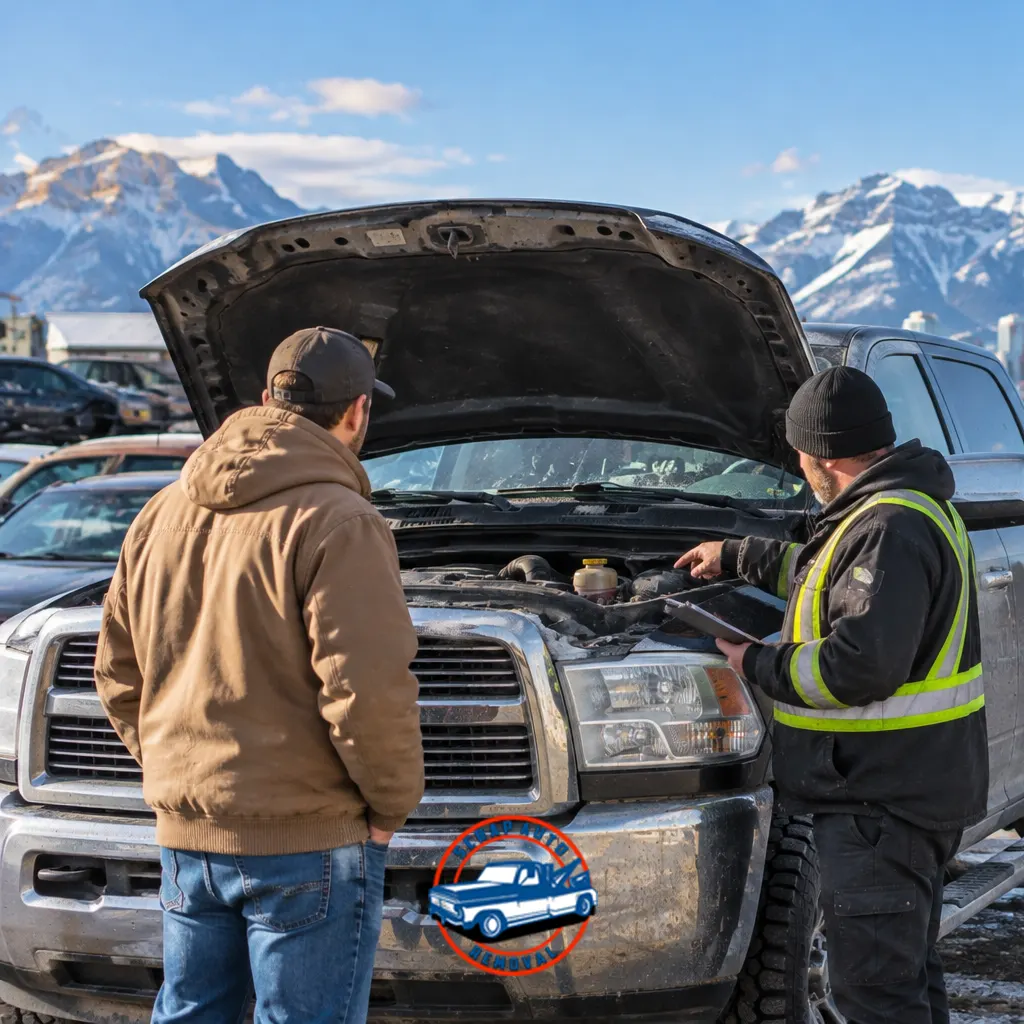
A vehicle that doesn’t run isn’t necessarily scrap, and a vehicle that looks terrible isn’t necessarily non-repairable. Since many damaged vehicles can’t be driven, ask each buyer whether removal from your driveway, parking stall, or collision shop is included in the quote. That one question often separates a clean, straightforward pickup from a surprise charge on the day.
Need a Damaged Vehicle Removed in Calgary or Elsewhere in Alberta?
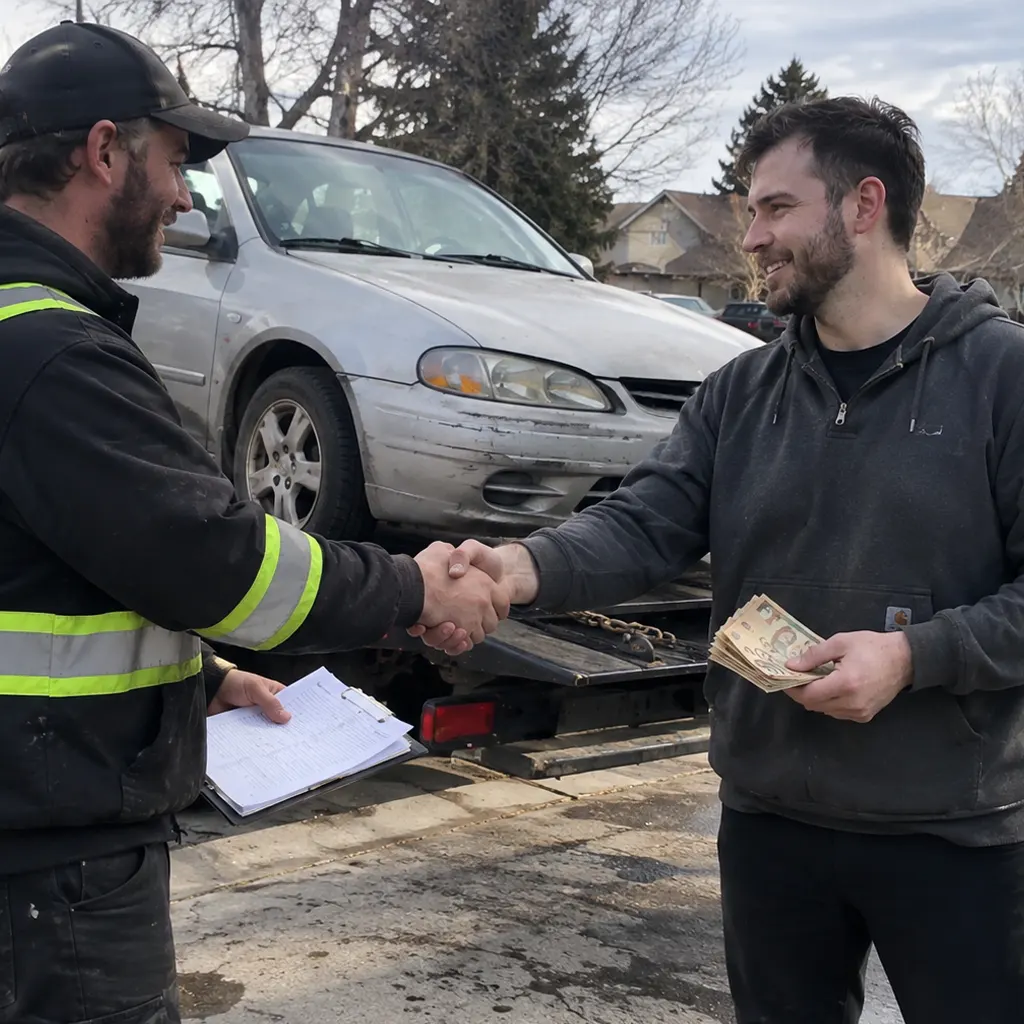
Once you know whether your vehicle is scrap, salvage, or non-repairable, the next step is an accurate offer and a pickup that fits your schedule. Scrap Auto Removal buys vehicles in any condition, including collision-damaged, non-running, hail-damaged, and salvage-status vehicles, and we’ll explain how the registry status affects your offer before you commit. Flatbed pickup is free across Calgary and more than 30 surrounding Alberta communities, with cash paid at pickup. Call (587) 355-1464 or email [email protected] with the vehicle’s year, make, model, and a description of the damage, and we’ll reply with a clear quote and pickup options.
Common Questions About Scrap and Salvage Cars in Alberta
Can I sell a salvage vehicle in Alberta without repairing it?
Yes. You can sell a salvage vehicle as is, but Alberta's regulation requires you to give the buyer either a current salvage inspection certificate or a written statement that the vehicle is salvage without one. Sell to a rebuilder or a scrap or parts buyer, and describe the damage accurately so the offer holds at pickup.
Is a scrap car the same as a non-repairable vehicle in Alberta?
Not exactly. Scrap is an informal market term, while non-repairable is a regulated status for salvage vehicles with no resale value except as parts or scrap metal. A scrap car can still hold an active registration. A salvage vehicle becomes non-repairable when someone buys it for scrap or parts.
How long does a buyer have to report a non-repairable vehicle?
Under Alberta's Vehicle Inspection Regulation, a person who buys a salvage vehicle for scrap or parts, or who destroys or dismantles one, must notify the Registrar within 6 days. The vehicle becomes non-repairable on the purchase date or when dismantling begins. The buyer files the notice, not the seller.
Does a rebuilt status ever go away?
No. Alberta.ca says the rebuilt status follows a vehicle for the rest of its useful life. After a salvage vehicle is repaired and passes its inspection, the status changes from salvage to rebuilt, and that record stays with the vehicle through every future sale, so buyers and sellers should expect it to affect value.
Does hail damage make a car salvage in Alberta?
Not when hail is the only damage. Alberta's Vehicle Inspection Regulation says the insurer-payout rule doesn't apply to a vehicle whose sole damage is hail damage to the outer body sheet metal. Hail combined with other damage isn't covered by that exclusion, so confirm the vehicle's status with a Vehicle Information Report.
Scrap Car vs Salvage Car: What Alberta Sellers Should Remember
The scrap car vs salvage car question comes down to whether a vehicle’s future is on the road or in a recycling yard, and Alberta’s rules follow that line closely. Scrap describes market value, and salvage describes legal status. A scrap car can hold an active registration, a salvage car can be valuable to a rebuilder, and a non-repairable vehicle has no future beyond parts and recycling. Before you accept an offer, confirm the registry status with a Vehicle Information Report, gather a bill of sale or equivalent ownership document, and describe the damage accurately. Sellers who do those three things get quotes that hold up at pickup and avoid the disclosure problems that come with salvage-status vehicles.
Sources
- Alberta.ca — Salvage vehicle inspections
- Alberta King’s Printer — Vehicle Inspection Regulation, Alta Reg 211/2006
- CanLII — Vehicle Inspection Regulation, Alta Reg 211/2006 (current version)
- CanLII — Traffic Safety Act, RSA 2000, c T-6
- Alberta.ca — Vehicle information report
- Alberta.ca — Personal property liens, find a registration
- Alberta.ca — Rebuilt Vehicle Work Plan form
- Alberta Open Government — Automotive & Light Truck Inspection Manual