


A dealer trade-in wins when you’re buying a replacement vehicle in the same transaction, thanks to a real tax advantage. A cash sale wins in most other situations, especially for an older, non-running, or damaged vehicle that a dealer won’t take at real value. Getting this choice wrong usually means leaving money on the table on a trade-in, or spending weeks on a private sale that wasn’t worth the effort. Most people just default to whichever feels easier, without comparing the actual numbers. The right call comes down to two things: whether you’re buying a replacement vehicle at the same time, and what kind of shape your current one is in. This guide breaks down how each option works, where the numbers favor one over the other, and how to figure out which one fits your specific vehicle.
How Does a Dealer Trade-In Work?
A dealer trade-in starts with an appraisal, usually done in person, sometimes based on an online estimate that gets adjusted once someone actually looks at the car. The dealer isn’t buying your vehicle to keep and drive. They’re buying it because they plan to resell it, either on their own lot or through a wholesale auction if it isn’t something they want to retail.
That resale plan shapes the number they offer you. A dealer needs enough margin left over to cover reconditioning, marketing, and their own profit, so the trade-in figure tends to sit below what the car might fetch in a private sale.
Reconditioning costs are a big part of why that gap exists. Before a trade-in vehicle goes back out to a retail buyer, it typically needs:
- A full detail
- A safety inspection
- Whatever minor repairs make it presentable to a retail buyer
All of that comes out of the trade-in value before it’s ever offered to you. A vehicle that would need significant work to retail well often gets sent straight to wholesale auction instead, where it sells for less than a retail-ready car would, and that lower expected return shows up directly in the number the dealer is willing to offer at the appraisal desk.
The one place a trade-in can genuinely pay off financially, not just in convenience, is the tax treatment. Under federal GST rules, when you trade a vehicle in as part of buying another one from a dealer, GST applies only to the difference between the new vehicle’s price and your trade-in value, not the full purchase price. Here’s how that plays out on a typical deal:
- Replacement vehicle price: $30,000
- Trade-in value: $8,000
- GST charged on: $22,000 (the difference, not the full price)
- Tax savings: roughly $400 at Alberta’s 5% GST rate
Sell that same car privately first, and you don’t receive this reduction on the new vehicle purchase, since the GST calculated on the full new vehicle price applies regardless of what you did with your old one. The catch is that this only works when the trade-in and the new purchase happen in the same transaction with the same dealer. Sell the old car separately, even a day earlier, and the tax benefit disappears along with it.
- Read Also:
How Does a Cash for Cars Sale Work?
A cash-for-cars sale generally involves a simpler appraisal and negotiation process than a dealer trade-in. You describe the vehicle’s year, make, model, and condition, usually over the phone or through an online form, and get a quote back based on that description. Here’s what happens from there:
- The offer can still be adjusted once someone inspects the vehicle in person, particularly if its actual condition differs from what was described.
- There’s no dependency on buying anything else, no financing conversation, and no wholesale auction sitting between your car and the final number.
The offer reflects what the buyer can do with the vehicle, whether that’s a running resale, parts recovery, or straight scrap weight, rather than what it would take to prep and retail it on a lot.
Once you accept a quote, depending on the buyer and scheduling, pickup and payment may be completed quickly, sometimes the same day or the next. A truck arrives, someone confirms the vehicle matches what was described, and payment changes hands, typically cash or e-transfer, before the car is loaded and towed away. Many cash-for-cars buyers include towing at no extra cost, which is worth confirming directly, since it matters most for a vehicle that can’t be driven anywhere on its own.
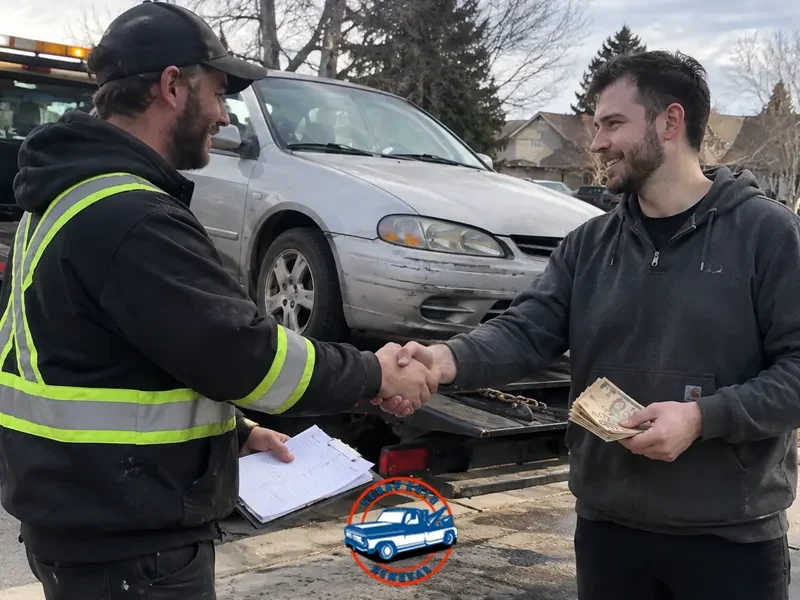
Side by Side: When Each One Wins
Neither option is universally better, and the honest comparison changes depending on two things: what condition the vehicle is in, and whether a replacement purchase is part of the picture. A newer car that runs well is the scenario dealers are built around, since it fits neatly onto their lot with minimal reconditioning. An older, non-running, or damaged vehicle sits outside that model entirely, which is where a dealer’s interest, and their offer, tends to drop off fast. The table below breaks down how that plays out across the situations people run into.
| Situation | Dealer Trade-In | Cash for Cars |
|---|---|---|
| Running vehicle, buying a replacement from a dealer | Often wins on after-tax value | Rarely competes on the tax math |
| Older or high-mileage vehicle, no replacement planned | Usually the weakest offer, or a flat decline | Typically the stronger, faster offer |
| Non-running, damaged, or accident-branded vehicle | Some dealers will accept it, but often at a low value or with restrictions | This is the core of what these buyers do |
| Time matters more than a marginal price gap | Ties into the same appointment as buying a new car | Same-day pickup may be available, without tying the sale to another purchase |
A vehicle that’s running well and worth trading toward a new purchase is the dealer’s strongest case. A vehicle that’s older, non-running, or has real damage is where the math flips, since most dealers aren’t set up to take on a car they can’t resell, and the offer reflects that.
What a Dealer Offer Doesn't Always Show You
How the dealer structures the deal and whether the business is properly licensed can matter just as much as the offer itself.
The Blended Negotiation Problem
A trade-in number rarely arrives on its own. It gets folded into the broader negotiation on the vehicle you’re buying, which makes it hard to know whether you got a fair number for your old car or a fair price on the new one, since the two get blended together at the finance desk. A dealer might quietly raise the new vehicle’s price by a few hundred dollars while advertising a generous-sounding trade-in figure, and the math still works out the same for them either way. Asking for the trade-in value and the new vehicle’s price as two separate figures, in writing, before signing anything, is the only real way to see both sides clearly and compare the trade-in number against what a condition-based cash offer would pay.
Confirm AMVIC Licensing
It’s also worth confirming that a dealer is AMVIC-licensed, since businesses engaged in regulated vehicle sales activities in Alberta are subject to provincial licensing and consumer-protection requirements. A licensed dealer has to follow specific disclosure and advertising rules, which gives you more recourse if something about the deal doesn’t add up later.
In our experience, many of the vehicles that come to us after a dealer trade-in attempt are older or higher-mileage vehicles that the dealer either declined or valued conservatively, since those vehicles were never a good fit for a dealer’s resale lot in the first place.
What Happens After You Accept Either Offer
The paperwork looks different depending on which route you take. With a dealer trade-in, the trade-in is documented as part of the purchase transaction, and the dealer provides the required sales paperwork on their end. Your own registration and license plate are still handled according to Alberta’s standard registration rules, including any transfer or cancellation steps that go through a registry agent rather than being completed by the dealer alone.
A cash for cars sale is a simpler, standalone paper trail. The buyer completes a bill of sale on the spot, you keep a copy for your own records, and you’re responsible for removing your licence plate before the vehicle leaves, since plates belong to the registered owner in Alberta rather than the vehicle itself.
From there, cancelling the registration and updating your insurance are steps you handle directly rather than something folded into someone else’s paperwork. Understanding the documents you need to scrap a car ahead of time makes this part faster regardless of which buyer you choose.
A Quick Way to Decide
Most of the back-and-forth people go through comparing these two options comes down to a handful of underlying questions, and answering them honestly upfront usually settles the decision before a single phone call gets made. The biggest factor by far is whether a replacement vehicle is part of the plan, since that’s the one condition where the tax math can tip things toward a dealer. Everything else largely comes down to the vehicle’s actual condition and how much your own time is worth compared to a modest difference in the final number.
- Are you buying another vehicle from a dealer at the same time? If yes, get a trade-in quote and compare the after-tax numbers before deciding.
- Does the vehicle run and drive without major issues? That generally gives you more dealer trade-in options.
- Is the car older, non-running, or damaged? A cash buyer is usually the faster and more realistic route.
- Does the timeline matter more than squeezing out an extra few hundred dollars? Same-day pickup removes the appointment and negotiation entirely.
Get a No-Obligation Quote
If you’d rather skip the appraisal and negotiation entirely, especially for a vehicle that’s older, non-running, or damaged, getting a condition-based quote from Scrap Auto Removal takes a few minutes and costs nothing, whether or not you end up going with a dealer instead. Email [email protected] or request a quote online.
The Bottom Line
Neither option wins by default. A dealer trade-in earns its place specifically when a replacement purchase is part of the same transaction, since that’s the one scenario where the tax treatment can outweigh a lower headline number. Outside that situation, older vehicles, non-running cars, and sales where no purchase is planned tend to favor a straightforward cash sale, since most dealers simply aren’t built to take on a vehicle they can’t resell. The only way to know which one fits is to get both numbers before committing to either.
Frequently Asked Question
Yes. A dealer trade-in can offer better overall value when you buy a replacement vehicle from that dealer in the same transaction. In Alberta, GST generally applies to the difference between the purchase price of the replacement vehicle and the trade-in allowance, which may offset a lower headline offer. If you sell your vehicle separately without trading it in as part of that purchase, this trade-in tax treatment does not apply.
Sometimes, but a dealer may offer a low amount or decline the vehicle, depending on its condition and resale options. A non-running, damaged, or accident-branded vehicle may be harder for a dealer to resell. Cash-for-cars buyers may be more suited to these vehicles, but offers and acceptance depend on the buyer and the vehicle.
No. Selling to a cash-for-cars service is a separate transaction, so you do not need to purchase another vehicle. You can request a quote based on your vehicle's details and condition, then decide whether to accept it. Pickup and payment timing depend on the buyer's terms and availability.
Ask the dealer to provide the trade-in allowance and the replacement vehicle's price as separate figures in writing before you sign. This makes it easier to compare the offer with a condition-based cash quote from another buyer. Compare the overall cost of the replacement vehicle as well as the trade-in amount, since discounts and other terms can affect the final deal.
Yes. Before proceeding, check the business's licensing status with Alberta's Motor Vehicle Industry Council (AMVIC) and confirm which licensing requirements apply to the transaction. Licensing is an important consumer-protection check, but it does not by itself guarantee a particular offer, price, or outcome.