
A used car lot offers to sell your vehicle for you instead of buying it outright, and hands you a “consignment agreement” to sign. You’ve never heard the term used this way before, and the paperwork doesn’t explain it either. Most people guess consignment is some kind of loan or a variation on a trade-in, and act on that guess without checking. That’s a problem, because consignment works nothing like either one, and signing on for the wrong method can leave your car sitting unsold for months or cost you more in fees than you’d have made elsewhere. Knowing what you’re actually agreeing to matters in Alberta specifically, since the arrangement comes with regulatory protections, and because it suits some vehicles well and others not at all. This guide breaks down what consignment actually means, how it works, what it costs, and which camp your car falls into.
What Does Consignment Mean When Selling a Car?
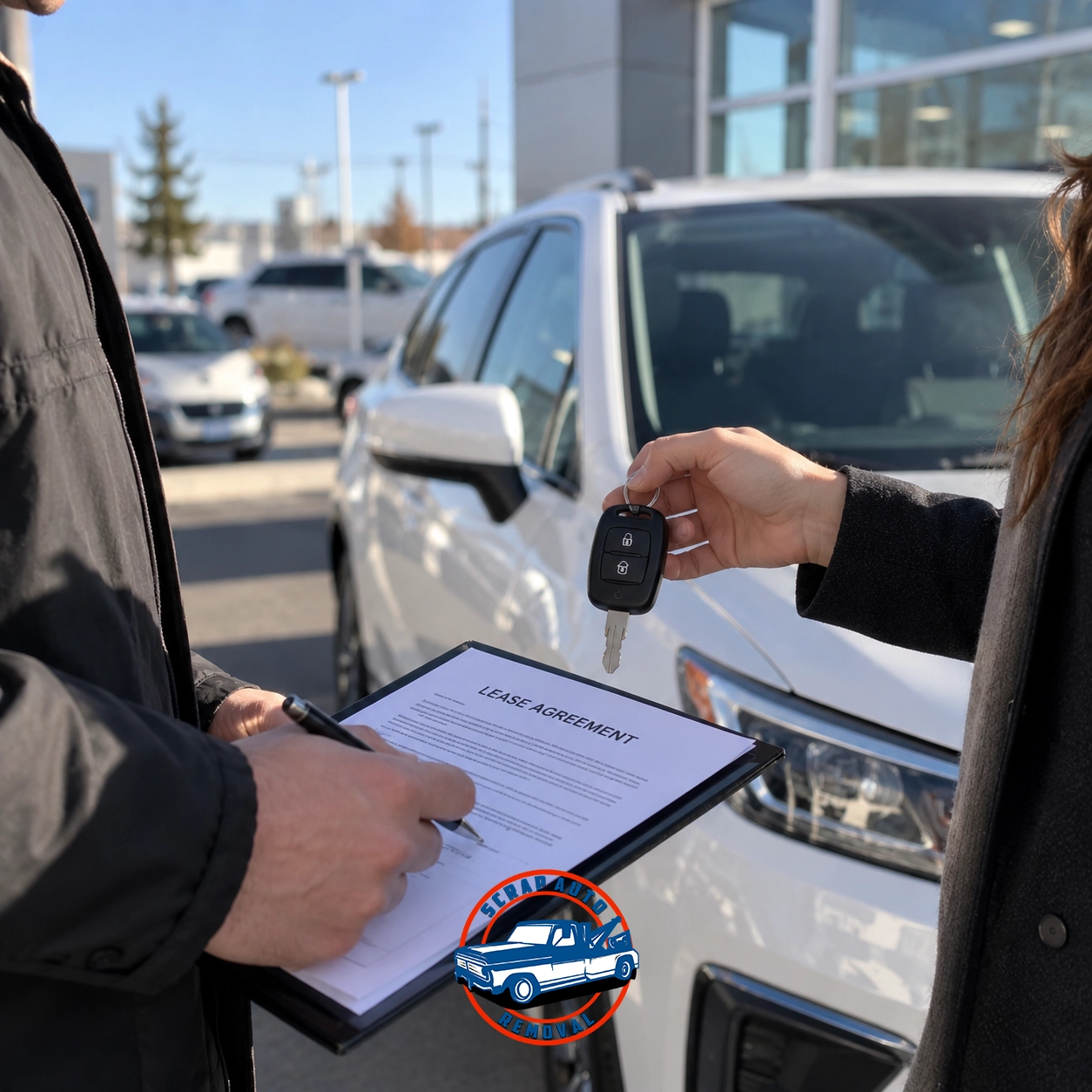
Consignment means paying a business to sell your vehicle on your behalf in exchange for a fee. You retain ownership of the car while it’s listed, the business handles marketing, showing, and negotiating with buyers, and once it sells, you receive an agreed-upon amount after the business takes its fee. Car consignment Alberta rules are set by AMVIC, the province’s automotive industry regulator, and this arrangement is distinct from trading in a vehicle or selling it outright to a dealer, since you don’t hand over ownership until an actual buyer is found.
How Car Consignment Works, Step by Step
Before you sign anything, confirm these details are addressed in writing: who’s responsible for insurance while the vehicle is listed, whether you’ll be consulted on offers below a certain price, what happens if the vehicle needs repairs to sell, and what the business does if the vehicle doesn’t sell within the agreed timeframe. Verifying the business’s AMVIC licence status before handing over your vehicle is worth the two minutes it takes.
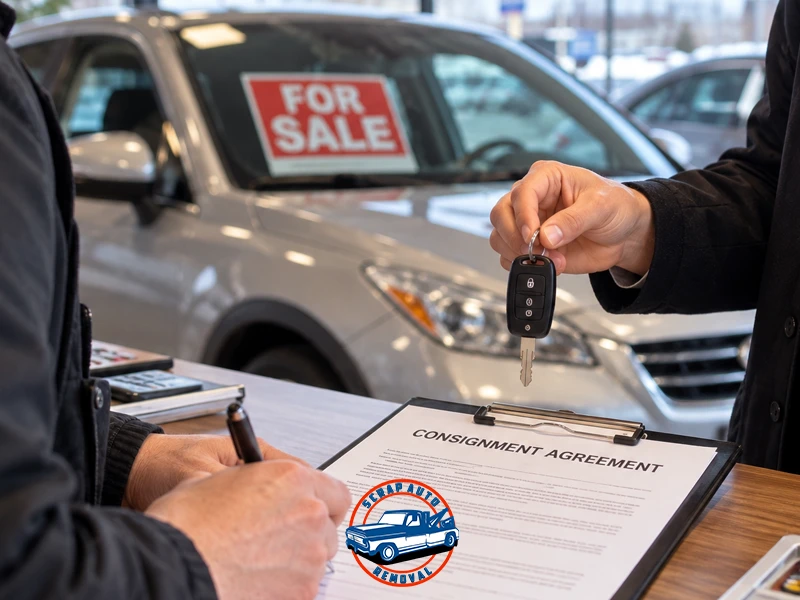
- You bring your vehicle in for evaluation. Most consignment businesses want to see the car in person before agreeing to list it, and will look at mechanical condition, mileage, cosmetic state, and vehicle history before deciding whether it’s a good fit. Bring your registration, any service records, and your government-issued photo ID.
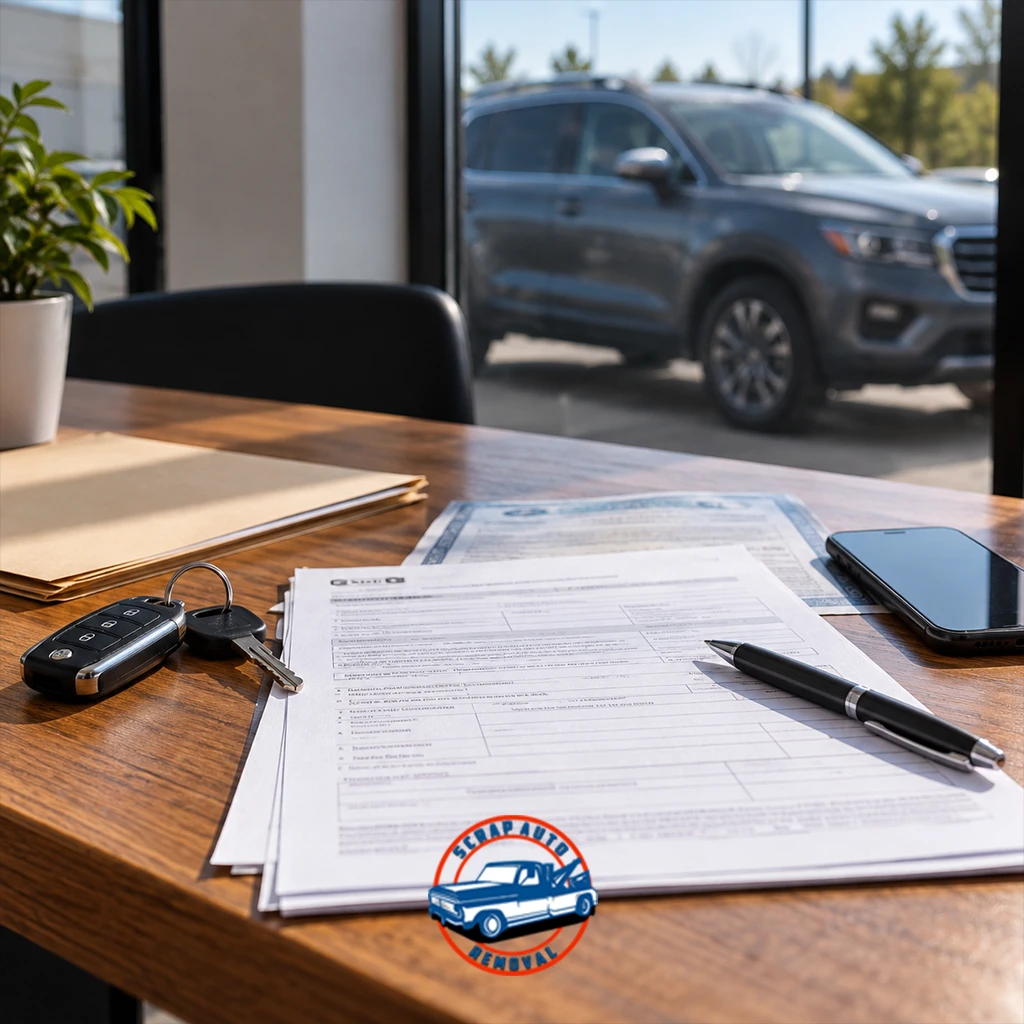
- You sign a consignment agreement. AMVIC requires the agreement to spell out specific terms before you sign anything, including who insures the vehicle while it’s listed, what fees the business charges, whether any repairs will be done and who pays for them, and the minimum amount you’ll receive from the sale. The agreement should also state a start and end date for the listing, and what happens if the vehicle doesn’t sell in that window.
- The business lists and markets your vehicle. This typically includes photos, an online listing, and sometimes physical display at a lot, depending on the business. Some businesses also handle minor detailing or reconditioning before listing, which may be billed separately depending on your agreement.
- The business handles buyer interest and negotiation. You’re not the one fielding calls or negotiating price; that’s the point of paying the fee. Depending on the agreement, you may still have final say on whether to accept a given offer, so it’s worth confirming this before you sign.
- The vehicle sells, typically within a few weeks to a couple of months. How long this takes depends heavily on the vehicle’s price point, condition, and demand; a well-priced, in-demand vehicle can sell in days, while a niche or overpriced one can sit for months. Once a buyer is found and the sale completes, the business is required to pay you within 14 days, along with the applicable account and sale documentation required under the agreement and Alberta’s rules.
- You receive your payout, which is the agreed sale amount minus the consignment fee.
- Read Also:
What Consignment Actually Costs in Alberta
Consignment fees vary by business and agreement. They may be structured as a flat fee, a percentage of the sale price, or a combination of charges, so the exact fee and any additional deductions should be clearly stated in the consignment agreement before you sign.
One important regulatory detail: any business licensed to do consignment sales in Alberta must furnish $300,000 in security to AMVIC, in the form of cash, an irrevocable standby letter of credit, or a surety bond. AMVIC requires this security because, in its own words, the nature of consignment transactions creates a high-risk environment for potential financial harm to consumers. Alberta has seen real cases of this risk playing out, including a widely reported consignment business failure that left vehicle owners unpaid, which is part of why the security requirement exists today. Always verify that a consignment business is currently licensed with AMVIC before signing anything.
Consignment vs. Trade-In vs. Private Sale vs. Selling for Cash
Consignment vs private sale comes down to who does the work: with consignment a business handles it for a fee, with a private sale you do it yourself for free. The core trade-off is control and price versus speed and certainty. Consignment can potentially get you a higher sale price than a quick cash sale, since the business is marketing to retail buyers rather than pricing the vehicle at wholesale or scrap value. But it takes longer, and you don’t get paid until the vehicle actually sells.
| Method | Who Handles the Sale | Typical Timeline | Payout Timing |
|---|---|---|---|
| Consignment | A licensed business, on your behalf | Weeks to months | Within 14 days of sale, per AMVIC rules |
| Trade-in | A dealer, as part of a new purchase | Usually completed as part of the vehicle purchase | Applied to the purchase transaction once finalized |
| Private sale | You, directly to a buyer | Days to weeks | At or around closing, as agreed by buyer and seller |
| Direct cash sale | A cash buyer, purchasing outright | Often faster; timing varies by buyer | According to the buyer's payment terms |
When Consignment Makes Sense (and When It Doesn't)
Consignment tends to work best for vehicles that are in good mechanical and cosmetic condition, reasonably in-demand, and worth enough that the retail sale price meaningfully exceeds what a quick sale would bring after the consignment fee is factored in. A well-maintained, newer vehicle with clean history is the kind of car consignment businesses want to list, because it will actually sell and generate their fee.
Consignment may be less suitable for vehicles that are older, high-mileage, mechanically unsound, or significantly damaged. Many consignment businesses may decline vehicles they don’t believe they can sell successfully at retail, particularly when the condition limits the potential buyer pool. If your vehicle doesn’t run, has significant body damage, or is well past the point where a retail buyer would want it, consignment may not be a realistic option.
This is also where the waiting period becomes a real consideration. Insurance and storage costs may continue during the consignment period, depending on the agreement and how the vehicle is stored, with no guarantee of a sale at the end.
- Read Also:
Get a Cash Offer If Consignment Isn't the Right Fit
If you’re weighing whether to sell car through consignment or take a faster route, and your vehicle isn’t a good candidate for consignment, whether it’s older, high-mileage, non-running, or damaged, Scrap Auto Removal can give you a firm cash offer today instead of waiting weeks for a retail sale that may not happen. Get a quote or email [email protected] and we’ll get back to you with a real offer, no obligation.
Conclusion
Consignment means letting a licensed business sell your vehicle on your behalf for a fee, and in Alberta it comes with real regulatory protections, including AMVIC’s security bond requirement and the 14-day payout rule. It’s worth considering for a well-maintained, in-demand vehicle where the retail sale price justifies the wait, and where you’re comfortable with the car sitting unsold for weeks or months. The trade-off is real: more potential money against less certainty and a longer timeline. For older, high-mileage, non-running, or damaged vehicles, consignment usually isn’t realistic, since most consignment businesses are selective about what they’ll list. In those cases, a direct cash sale through a scrap car removal Calgary service gets you paid today instead of waiting on a retail buyer that may never show up.
Frequently Asked Questions
Selling a car on consignment means paying a licensed business to sell your vehicle on your behalf for a fee, while you retain ownership until it sells. The business handles marketing, showings, and negotiation with buyers. Once sold, AMVIC requires the business to pay you within 14 days along with a detailed statement showing the sale price and fee.
Consignment fees vary by business and agreement, and may be structured as a flat fee, a percentage of the sale price, or a combination of both. AMVIC requires the fee structure to be disclosed in your written consignment agreement, so the exact amount and any additional deductions should be clearly stated before you sign anything.
It depends on the severity, but most consignment businesses are reluctant to accept vehicles with significant mechanical problems. Consignment relies on the vehicle selling to a retail buyer, and a car with major issues is harder to sell and less profitable to list. These vehicles are usually better suited to a direct cash sale.
It depends on your priorities. Consignment can potentially get you a higher price since the vehicle sells to a retail buyer rather than at trade-in value, but it takes weeks or months and payment only comes after a sale. Trading in is immediate but usually nets a lower amount, since the dealer buys at wholesale.
If a consigned vehicle doesn't sell within the agreed period, you typically reclaim it and either extend the agreement, lower the asking price, or pursue a different selling method. During this time you're generally still responsible for insurance and any storage costs, since ownership hasn't transferred. Check your agreement for the specific terms.
References
Sources
- Alberta Motor Vehicle Industry Council (AMVIC). Consigning a Vehicle.
https://www.amvic.org/consumer/consigning-a-vehicle/ - Alberta Motor Vehicle Industry Council (AMVIC). Consignment Business Licensing.
https://www.amvic.org/business/business-licence/consignment/ - Alberta Motor Vehicle Industry Council (AMVIC). Licensing Policy, Version 9 (January 7, 2026).
https://www.amvic.org/wp-content/uploads/2026/01/Licensing-Policy-approved-Jan.-7-2026.pdf - CBC News (June 22, 2015). Alberta Motor Vehicle Industry Council sued for negligence.
https://www.cbc.ca/lite/story/1.3123057 - Government of Alberta. Buying a Used Vehicle in Alberta.
https://www.alberta.ca/buying-a-used-vehicle-in-alberta