A vehicle that was last registered outside Alberta usually can’t get Alberta plates until it passes an out-of-province vehicle inspection. The technician works from a pass-or-fail manual that covers brakes, tires, lights, steering, glass, and more, so one worn part can send the car straight back to the shop. That matters because a fail means repair bills, a short repair window, and a second visit, and on an older or high-mileage vehicle the total can climb past what the car is worth.
This checklist covers what to look at by yourself first, which documents to have ready, and what to do if the repairs don’t make sense.
Repairs Costing More Than the Car? Get a Cash Offer
Scrap Auto Removal buys out-of-province vehicles in any condition, so you can compare a cash offer with your repair estimates before you book an inspection. See how scrap car removal in Calgary works, or call (587) 355-1464 or email [email protected] with the year, make, model and condition.
What Is an Out-of-Province Vehicle Inspection in Alberta?
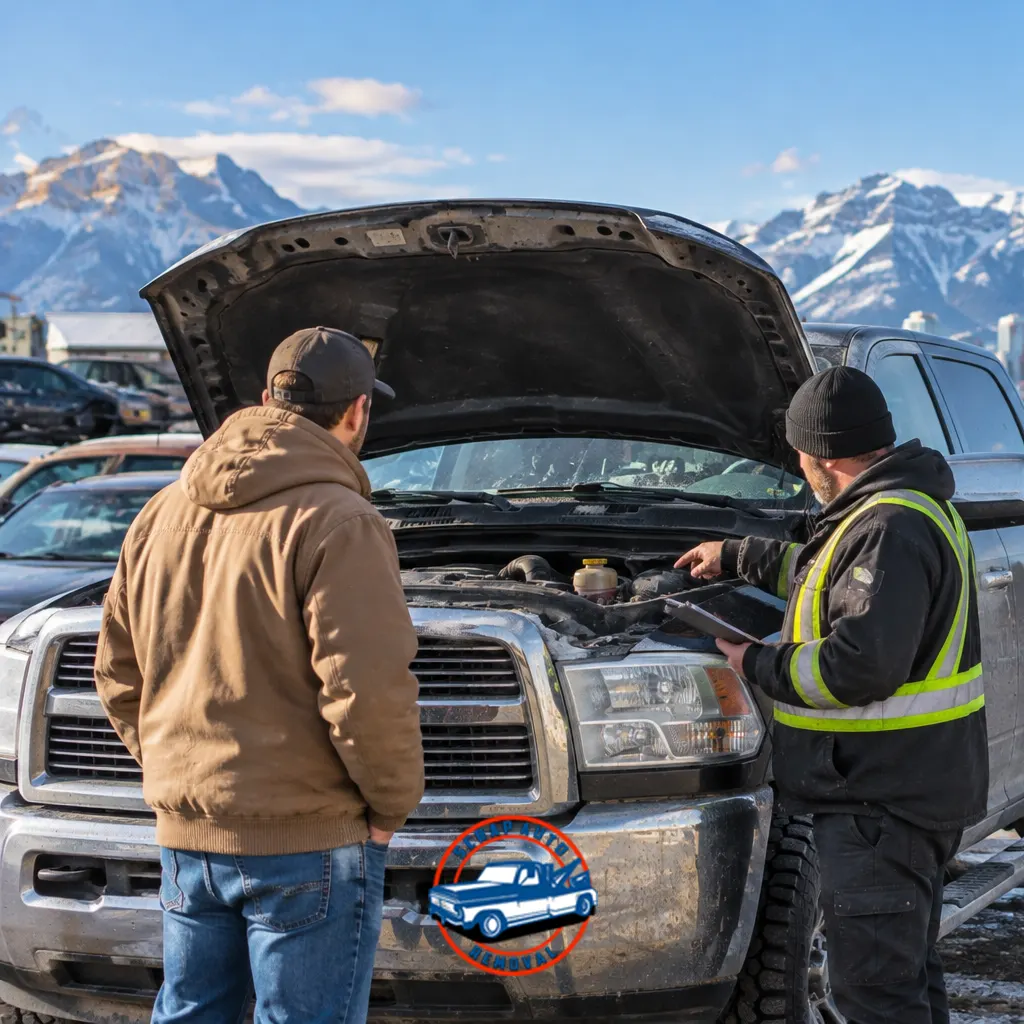
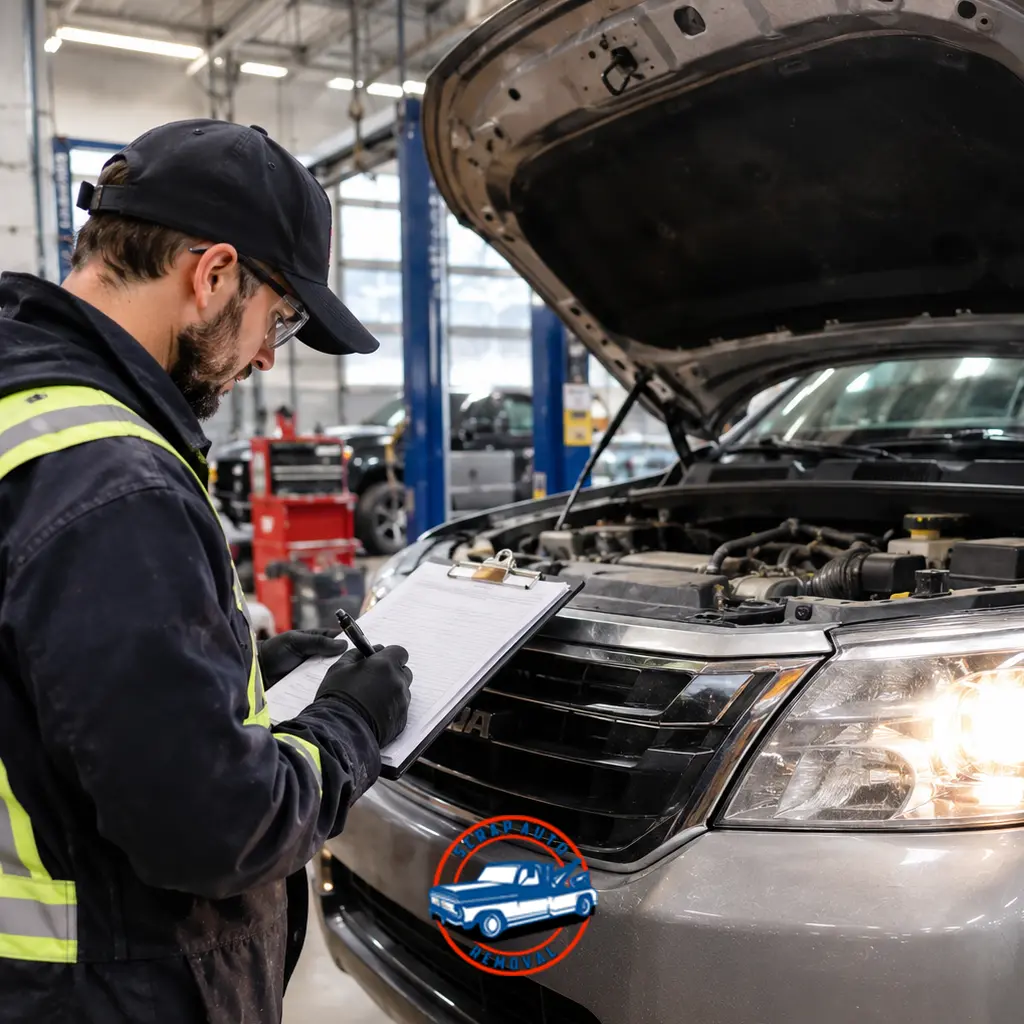
An out-of-province vehicle inspection is a safety inspection that Alberta requires for a vehicle last registered in another province, territory, or country before it can be registered here. It confirms the vehicle meets Alberta’s safety and equipment standards. A journeyperson technician who holds a Vehicle Inspection Program license has to do the work at a licensed facility, and it takes about two hours on average, depending on the vehicle.
In Calgary, that usually means an automotive repair shop or a service station with a repair bay. Each facility sets its own prices for inspections and re-inspections and has to post them where customers can see them, so it makes sense to call a few places before booking. The vehicle owner pays for the inspection.
The inspection is one step in a short process if you need to register an out-of-province vehicle in Alberta: buy a request form from a registry agent, get the vehicle inspected, then take the certificate back to a registry agent.
Does Your Vehicle Need an Out of Province Inspection in Calgary? Check Before You Book
Most vehicles bought outside Alberta need one, but a few categories are exempt. A registry agent can confirm your situation before you pay a shop, which is cheaper than finding out afterward. The exemptions in the Government of Alberta guidance cover these cases:
- New vehicles from another Canadian province or territory, bought or leased within the last 90 days from a factory-authorized dealer, with the bill of sale or lease agreement in your name.
- New vehicles from outside Canada, with the same 90-day, factory-authorized dealer, and bill-of-sale or lease requirements, plus a completed Registrar of Imported Vehicles (RIV) inspection and a Transport Canada Form 1 stamped twice.
- Commercial vehicles from another Canadian province or territory, with a valid commercial vehicle inspection certificate issued in the last 90 days.
- Private passenger vehicles from British Columbia, Saskatchewan, or Manitoba, if the vehicle is newer than four years (the current model year plus the previous three) or, when it’s older, passed a government mechanical inspection in that province within the last 90 days. Commercial and organizational vehicles don’t qualify, and the vehicle has to be registered in your name in that province.
- Off-highway vehicles, trailers, and prorated commercial vehicles, which don’t need an out-of-province inspection at all.
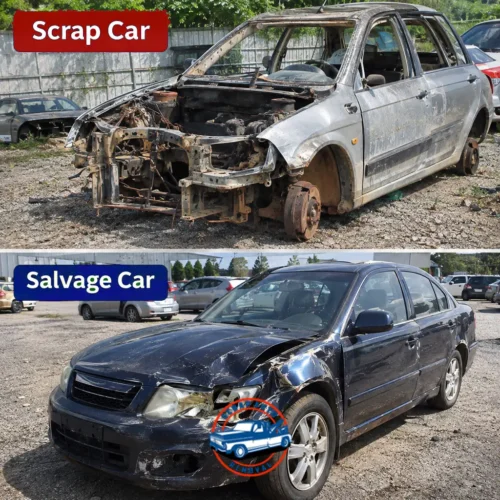
None of these exemptions apply if the vehicle’s history shows flood damage or an unsafe, salvage, or non-repairable status. Rebuilt, right-hand drive, custom-built, kit, and lifted or lowered vehicles can’t qualify either. A salvage vehicle goes through a separate salvage inspection after repairs instead.
What Are the 7 Things to Check Before an Out-of-Province Inspection in Alberta?
Use this out of province inspection checklist for Alberta as a driveway walk-around. The technician applies the province’s Automotive and Light Truck Inspection Manual, and the vehicle has to be within the manufacturer’s service limits to pass. A quick look won’t replace a technician’s measurements, but it will catch the obvious fails. The manual also covers seat belts, the horn, mirrors, airbags, and structural condition, so test those as well. Frame damage or rust that affects structural integrity is a reject, and that one is expensive to fix.
1. Brakes
Brakes get measured, not just glanced at. Pads or linings worn to 1.6 mm or less are a reject, and so are cracked or contaminated linings. Rotors fail for cracking, heat spots, or pitting, and leaking calipers, wheel cylinders, or brake lines fail on sight. The parking brake has to hold the vehicle still and release cleanly. At home, look through the wheel spokes at pad thickness, check the inside of each wheel for fluid, listen for grinding, and test the parking brake on a slope.
2. Tires and wheels
Tread at or below the wear bars at any point across any tire is a reject. So are cracks, separation, abnormal wear, and deformation. Tires on the same axle have to match in size, carry a DOT marking, and not be labeled as unsuitable for highway use. Walk around the vehicle and look for bulges in the sidewalls, check that each wear bar sits below the tread surface, and confirm the sizes match side to side. A tire that rubs the body or suspension also fails.
3. Lights
Any lamp that doesn’t light, or that’s missing, cracked, broken, or loose, is a reject. Headlamps are checked for alignment, and anything applied to a headlamp that changes the color of its light is a reject. Aftermarket tint that obscures the high-mounted stop lamp is a reject too. An LED assembly fails if more than 25% of its diodes are out. Turn on everything with a helper watching: low and high beams, brake lights, turn signals, hazards, and the license plate lamp. Check the dash too, because an airbag warning lamp that stays lit, or never comes on at startup, is a reject.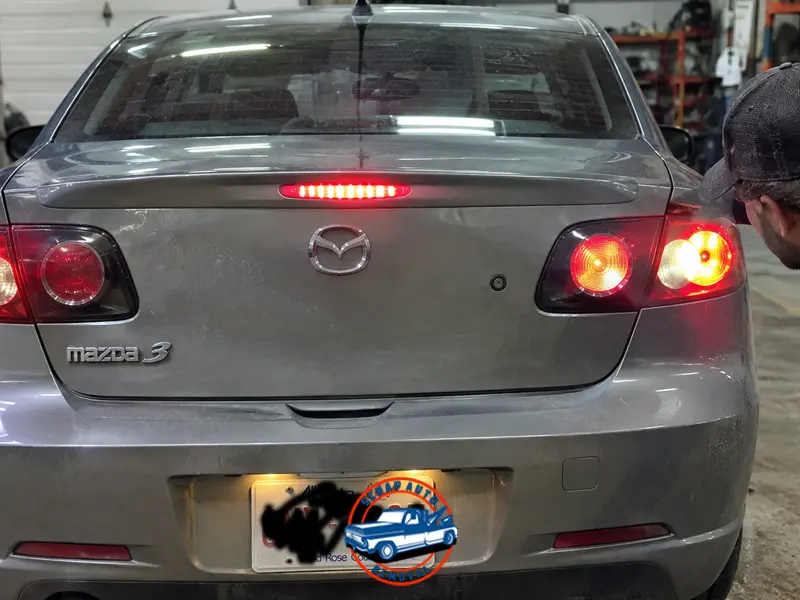
4. Steering and suspension
Loose or worn steering gear, leaking fluid, torn rack boots, and a disabled power steering system all fail. Wheel bearings, ball joints, tie rod ends, and control arms fail when they’re worn beyond serviceable limits, which the technician judges using the manufacturer’s inspection procedures. Shocks and struts fail the bounce test or if they leak or sit loose, although a thin film of seepage isn’t a reject. Push down hard on each corner and watch how it settles, look for wet shocks, listen for clunks over bumps, and check that the steering wheel sits centered when you drive straight. Uneven tire wear can point to an alignment problem.
5. Windshield and glass
A crack or blemish larger than 12 mm (half an inch) in the area the wipers sweep is a reject, although the area under the inside mirror and 75 mm (3 inch) strips at the top and bottom don’t count. A crack through both layers of the windshield is a reject too, as is one that runs to another edge through the wiper area. Darkening film isn’t allowed except for a strip of up to 150 mm (6 inches) across the top, and front side windows can’t be tinted. The wipers and washers also have to work as designed. Sit in the driver’s seat and look for chips in the wiper area, then run the wipers with washer fluid to see if they clear the glass without smearing or skipping.
6. Exhaust and noise
A cracked or leaking exhaust manifold fails, and so do loose, missing, or broken manifold bolts. Rust holes that could let exhaust gas into the passenger compartment are a reject as well. The rest of the system is checked too: it has to be original equipment or an equivalent, and a missing heat shield or a missing or broken hanger fails. Alberta also doesn’t allow an exhaust to be modified to make it louder. Start the engine cold and listen for ticking or a blowing sound near the manifold, then look under the vehicle for parts that hang low, look rusted through, or show black soot at the joints. A loud exhaust can mean a leak or a modified system, and either one can fail, so sort it out before you book.
7. VIN and paperwork
The inspection must be stopped if the VIN plate is missing, damaged, hard to see, or shows signs of tampering, or if the VIN on the vehicle doesn’t match the Request for Inspection form. The technician also compares the plate with the door decal, and a mismatch there gets referred to a Vehicle Inspection Program specialist. Before you go, compare the VIN on the dash, the door decal, the bill of sale, and any previous registration paperwork. If a digit is off on a document, sort it out with the seller or the registry agent first, because the VIN on your Request for Inspection form has to match the vehicle exactly. A mismatch with the form ends the inspection before the technician looks at a single brake pad.
What Paperwork Should You Bring to Your Calgary Inspection?
Two stops need paperwork: the inspection shop first, then a registry agent once you pass. Bringing the right documents to each one keeps the process from stalling.
Documents for the inspection shop
Buy a Request for Vehicle Inspection form from any Alberta registry agent before you book. It verifies the vehicle’s status, and the form doesn’t expire. Bring the vehicle and the form to the facility you chose, and ask for the form back once they’ve made a copy. Keep your bill of sale and previous registration paperwork in the glove box so the VIN can be compared. Whether the vehicle passes or fails, the facility has to hand you a signed Record of Inspection.
Documents for the registry agent
A passing vehicle earns an Out-of-Province Vehicle Inspection Certificate, and the certificate has to reach an Alberta registry agent within 14 days. A late certificate isn’t accepted, and a new inspection is required. At the registry, plan to bring:
- The inspection certificate (keep the Record of Inspection with it)
- Proof of ownership, such as a bill of sale, lease, probated will, or letters of administration
- Proof of valid insurance that includes the name of the person registering the vehicle
- Acceptable identification
Repair Cost vs. Vehicle Value: When Does Scrapping Make Sense?
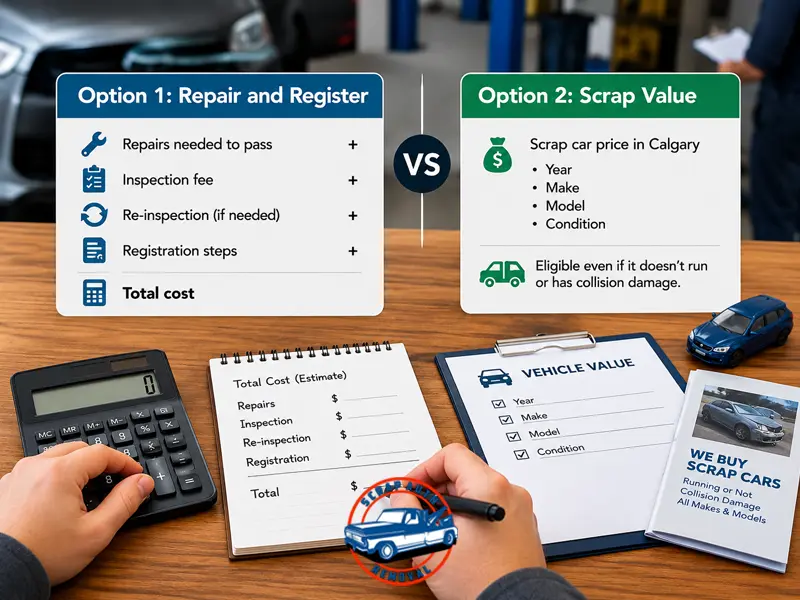
The decision comes down to one comparison. Add up the repairs needed to pass, the inspection and any re-inspection, and the registration steps, then set that total against what the vehicle is worth once it’s on the road. Alberta lets you take the vehicle to more than one technician before agreeing to repairs, so get at least two written estimates. When the estimates run higher than the car’s value, or the list includes structural problems like frame damage or rust perforation, repairing rarely pays off.
The other side of the comparison is what a scrap buyer offers. The scrap car price in Calgary depends on the year, make, model, and condition of the vehicle. Vehicles that don’t run or have collision damage are still eligible, which matters when you want to sell a scrap car in Calgary after a failed inspection.
| Repair and register the vehicle | Scrap the vehicle |
|---|---|
| Pro: You keep the vehicle and can register it in Alberta once it passes. | Pro: No repair bills, re-inspection, or registration steps. |
| Con: Repairs, inspection, and re-inspection costs add up, and a missed repair window means a full new inspection. | Con: You give up the vehicle, and the offer reflects scrap value, not repaired value. |
| Pro: Makes sense when the failed items are small, like a bulb or a wiper blade. | Pro: Works for vehicles that don't run or have damage that's too costly to fix. |
| Con: Structural damage or rust can cost more to fix than the vehicle is worth. | Con: Not the right call when the repairs are minor and the vehicle is otherwise sound. |
What Happens If Your Vehicle Fails the Out-of-Province Inspection?
The facility has to give you a signed Record of Inspection whether the vehicle passes or fails, and that record is your list of what needs fixing. If your out of province inspection failed, take the record to two shops for estimates before you agree to any work, then choose between repairing and scrapping.
Repair and re-inspect
You have 10 days from the original inspection to complete the repairs, and you can have them done at any facility you choose. The re-inspection can happen at the original shop or at another licensed one. Alberta’s guidance isn’t explicit about whether the re-inspection must also fall inside the 10 days, so plan to have the vehicle repaired and presented again within that window. A vehicle repaired and presented within the 10 days is checked only for the repairs that were required, which keeps the second visit shorter. If you miss the window, a full new inspection is required, so line up the parts and the repair appointment right away.
Scrap the vehicle instead
A failed inspection doesn’t stop you from selling the vehicle for scrap. If the estimates come back higher than the car’s value, a scrap sale lets you skip the repairs, the re-inspection, and the registration steps entirely. The 10-day repair window is short, so decide within the first few days rather than letting it run out. Have your ownership paperwork and ID ready when you call, and the buyer can quote the vehicle right away.
How Does Scrap Auto Removal Help Calgary Drivers?
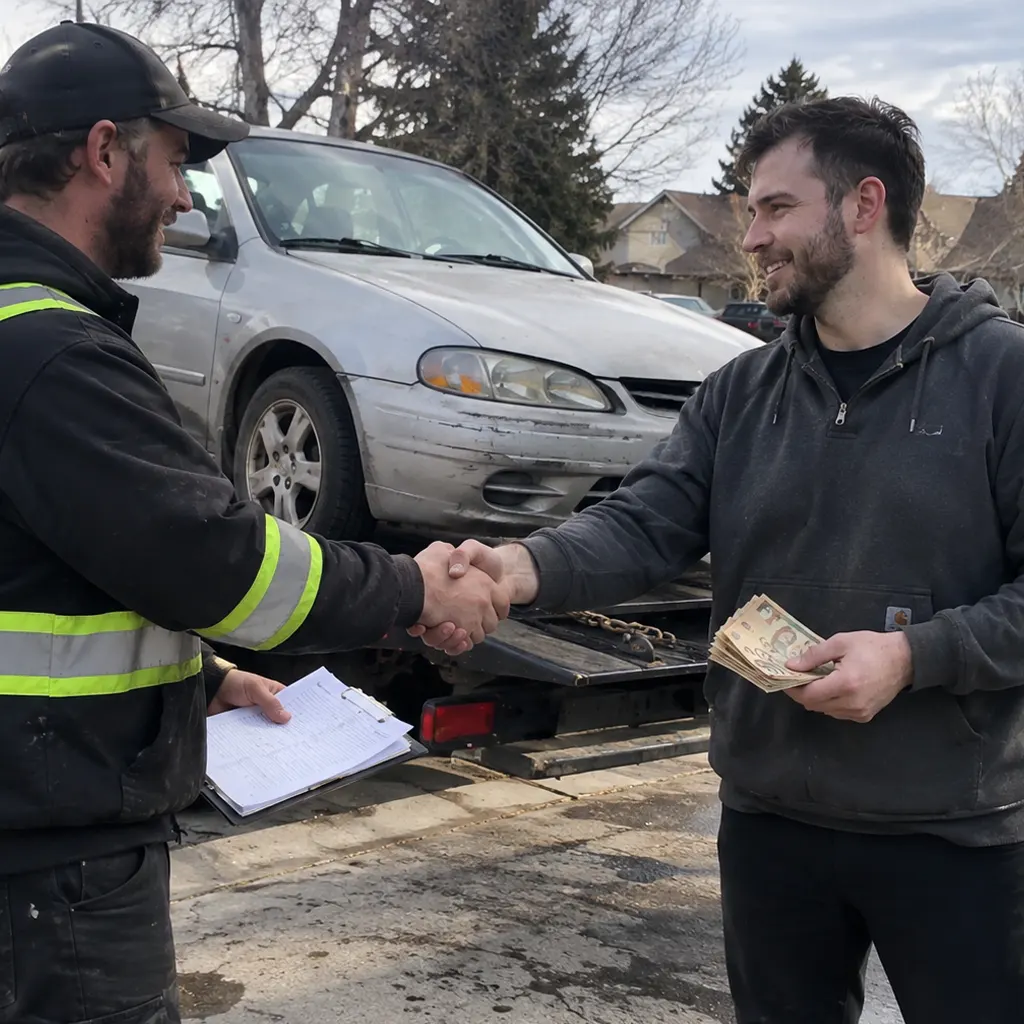
Scrap Auto Removal is a Calgary scrap car removal team that pays cash for scrap cars and trucks in any condition, and is Licensed and Insured. The team doesn’t inspect vehicles or do repairs. It gives you a firm cash offer so you can compare it against the repair estimates and pick the better option without guessing.
The process takes three steps:
- Get a quote. Call or send the vehicle’s year, make, model, and condition, and you’ll get an offer based on those details.
- Free towing. Pick a time that works, and the tow truck comes to you at no charge, whether the vehicle runs or not.
- Cash on pickup. You’re paid when the vehicle is collected, and you don’t need to arrange a buyer, a listing, or a drop-off.
Pickups cover Calgary and the surrounding communities, including Airdrie and Cochrane, so a vehicle that failed inspection at a shop outside the city limits can be collected from there.
Got a Car That Won't Pass? Get a Cash Quote in Calgary
If the repair estimates are higher than the vehicle’s value, a quick quote shows what scrapping it would put in your pocket. Call (587) 355-1464, or email [email protected] with the year, make, model, and condition of the vehicle. You’ll hear back with an offer, and you can decide after seeing the number.
Common Questions About Out-of-Province Inspections
Do I need an out-of-province inspection to register a car in Alberta?
Usually, yes. A vehicle bought outside Alberta within Canada has to pass an Alberta out-of-province inspection before it can be registered. A few vehicles are exempt, such as new vehicles from a factory-authorized dealer bought within 90 days and some newer vehicles from British Columbia, Saskatchewan, or Manitoba.
What is checked in an out-of-province inspection?
The technician checks the vehicle against Alberta's Automotive and Light Truck Inspection Manual. That covers brakes, tires and wheels, lighting, steering and suspension, windshield and glass, the exhaust, seat belts, the horn, mirrors, airbags, VIN verification, and structural condition. Any item that doesn't meet the standard is recorded as a fail on the Record of Inspection.
How long is the inspection certificate valid?
The certificate has to be presented to an Alberta registry agent within 14 days. A certificate that's presented late isn't accepted, and the vehicle needs a new inspection. Because the window is short, book the registry visit soon after you pass, and bring proof of ownership, proof of insurance, and acceptable identification with you, along with the Record of Inspection.
What happens if my car fails an out-of-province inspection?
The facility gives you a signed Record of Inspection listing what failed. You then have 10 days from the original inspection to repair it at any facility you choose and present it for re-inspection. A vehicle repaired and presented within that window is checked only for the required repairs. If you miss the 10 days, a new inspection is required.
Repair It or Scrap It? A Simple Way to Decide
An out-of-province vehicle inspection is easier to pass when you find the problems before the technician does. Check the brakes, tires, lights, steering and suspension, glass, exhaust, and VIN first, then book the inspection with the form from a registry agent in hand. If the vehicle passes, get the certificate to a registry agent within 14 days. If it fails, compare written repair estimates with what the vehicle is worth, and watch the 10-day repair window. When repairs cost more than the car, selling it for scrap ends the problem the same week and puts cash in your hands instead of a repair invoice.
Sources
- Alberta.ca — Out-of-province vehicle inspections
- Alberta.ca — Register a vehicle in Alberta
- Alberta.ca — Registering an Out-of-Province Vehicle in Alberta (inspection exemptions)
- Alberta.ca — Automotive and Light Truck Vehicle Inspection Manual
- Alberta.ca — Salvage vehicle inspections
- Alberta.ca — Buying a used or special interest vehicle