
How Much Is My Car Worth in Canada

How Much Is My Car Worth in Canada?

Michael Tremblay

August 17, 2026

14 mins to read

Michael Tremblay

14 mins to read

Standard valuation tools give a reliable number for a typical car in typical condition, and a much less reliable one the moment your vehicle falls outside that. That’s the real answer most people need before they trust whatever number a free online tool spits out. A lot of sellers plug their VIN into the first calculator they find, see a number, and treat it as fact, without realizing that number is only as good as the data behind it. For a common five-year-old sedan, that’s usually fine. For anything older, higher-mileage, damaged, or simply unusual, it often isn’t, and trusting it anyway is how people end up either underselling a vehicle or walking into a negotiation with unrealistic expectations.

This guide covers all three ways to get a real number, what actually moves the price beyond a basic estimate, and how to tell which method you should actually trust for your specific vehicle.

Have a Vehicle That Standard Tools Can't Price Accurately?

If your car is too old, high-mileage, or worn for a valuation tool to give you a useful number, Scrap Auto Removal serves Calgary and more than 30 Alberta communities with real, condition-based quotes, no guessing involved. Get a quote or email [email protected] for a free assessment.

What's the Fastest Way to Get a Ballpark Value?

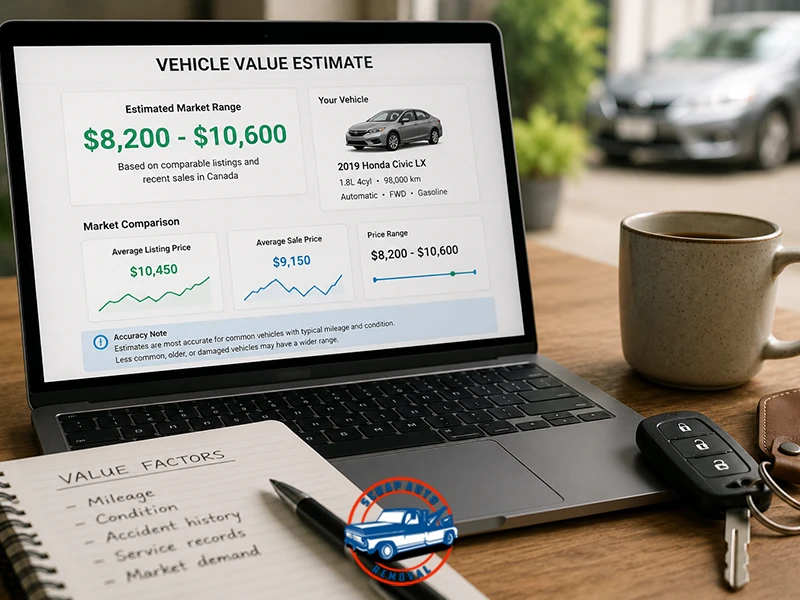
Online valuation tools are the quickest starting point. Services like Canadian Black Book and AutoTrader.ca’s valuation tool pull from comparable market listings, recent sales data, and guidebook pricing models to generate an estimated range based on your vehicle’s year, make, model, mileage, and general condition. Most take under two minutes and require no account. For a common vehicle in typical condition, this gives a genuinely useful number to start from, and it costs nothing to check before you commit to any next step.

How Accurate Are Online Valuation Tools, Really?

It depends heavily on how typical your vehicle is. These tools work by comparing your car against similar listings and sales in the market, which means they’re only as good as the comparable data available. A five-year-old Honda Civic has thousands of comparable listings across the country, so the estimate tends to be tight and reliable. A car that’s unusually old, has very high mileage, carries accident history, or is simply a less common model has far fewer comparables to draw from, and the tool’s estimate widens into a broad range or, in some cases, becomes unreliable enough that it’s not worth much on its own.

Depreciation itself follows a fairly predictable curve in the first several years: vehicles typically retain only 35 to 55 percent of their original value by the five-year mark, with the steepest drop happening in year one. But that curve flattens and becomes far less predictable as a vehicle ages further, which is exactly where valuation tools start to struggle.
 

How Much Is My Car Worth in Canada

Do Valuation Tools Work the Same Way for EVs and Hybrids?

Not quite. Electric and hybrid vehicles introduce a variable standard tools weren’t originally built around: battery health. Two identical hybrid vehicles of the same year and mileage can have meaningfully different values depending on battery condition, something a basic online estimate typically can’t see or account for. Battery diagnostics have become more common in newer valuation platforms, but older tools and general guidebook estimates still tend to treat EVs and hybrids more like conventional vehicles than the battery-dependent asset they actually are. If you’re valuing an EV or hybrid, treat the online estimate as an even rougher starting point than usual, and factor in an actual battery health check if one is available.

Getting a Real Number: Dealership Appraisals vs. Market Comparables vs. Direct Buyer Quotes

Once you’ve got a ballpark from an online tool, there are three real paths to an actual, actionable number:

Vehicle Valuation Methods Table
Method What it gives you Best for
Dealership trade-in appraisal An in-person offer, typically lower than private sale value Convenience, especially when buying another vehicle
Private market comparables Researching actual asking and sold prices for similar local listings Vehicles with enough comparable listings to make this worthwhile
Direct buyer quote A condition-based assessment, often same-day Vehicles that are hard to price with standard tools

A dealership appraisal factors in their resale margin, so it tends to land below what a private sale might bring. Checking actual local listings for comparable vehicles gives you a more realistic private-sale range than a tool’s algorithmic estimate, assuming there are enough similar vehicles listed nearby to compare against. A direct buyer quote skips the estimation step entirely and prices based on the vehicle’s actual condition in front of them.

What Actually Moves Your Car's Value Beyond the Base Estimate

A few factors consistently shift a vehicle’s value beyond what a basic tool estimate shows:

Vehicle Value Factors Table
Factor How it moves value
Mileage relative to age Unusually low or high mileage shifts value noticeably off the standard curve in either direction
Condition and accident history Documented maintenance and a clean history retain meaningfully more value than a similar vehicle without records
Regional demand AWD vehicles and trucks tend to hold value better in snow-heavy regions like Alberta; AutoTrader's own national Price Index data shows inventory and pricing shifts varying meaningfully by vehicle category and region
Wear and mechanical issues Matters more as a vehicle ages, and standard tools generally don't account for it since they work from listing data, not physical inspection

A Few Mistakes That Lead to a Wrong Number

A handful of avoidable mistakes show up again and again when people try to value their own vehicle:

  • Trusting a single tool’s estimate without cross-checking. Different platforms pull from different data sets, so two tools can give noticeably different numbers for the same car. Checking more than one gives you a better sense of the real range.
  • Ignoring how the vehicle’s actual condition compares to “average.” Every online tool assumes roughly average condition unless you tell it otherwise. If your vehicle is better or worse than that, the estimate needs adjusting accordingly, and most people forget to make that adjustment mentally.
  • Confusing trade-in value with private sale value. These are genuinely different numbers, and comparing a trade-in quote against a private-sale estimate as if they should match leads to unnecessary frustration on both ends.
  • Assuming the online estimate still applies after months of not selling. Market values shift, sometimes by several percent in a single quarter. A number that was accurate three months ago isn’t guaranteed to still be accurate today.

When a Standard Valuation Tool Won't Give You a Useful Number

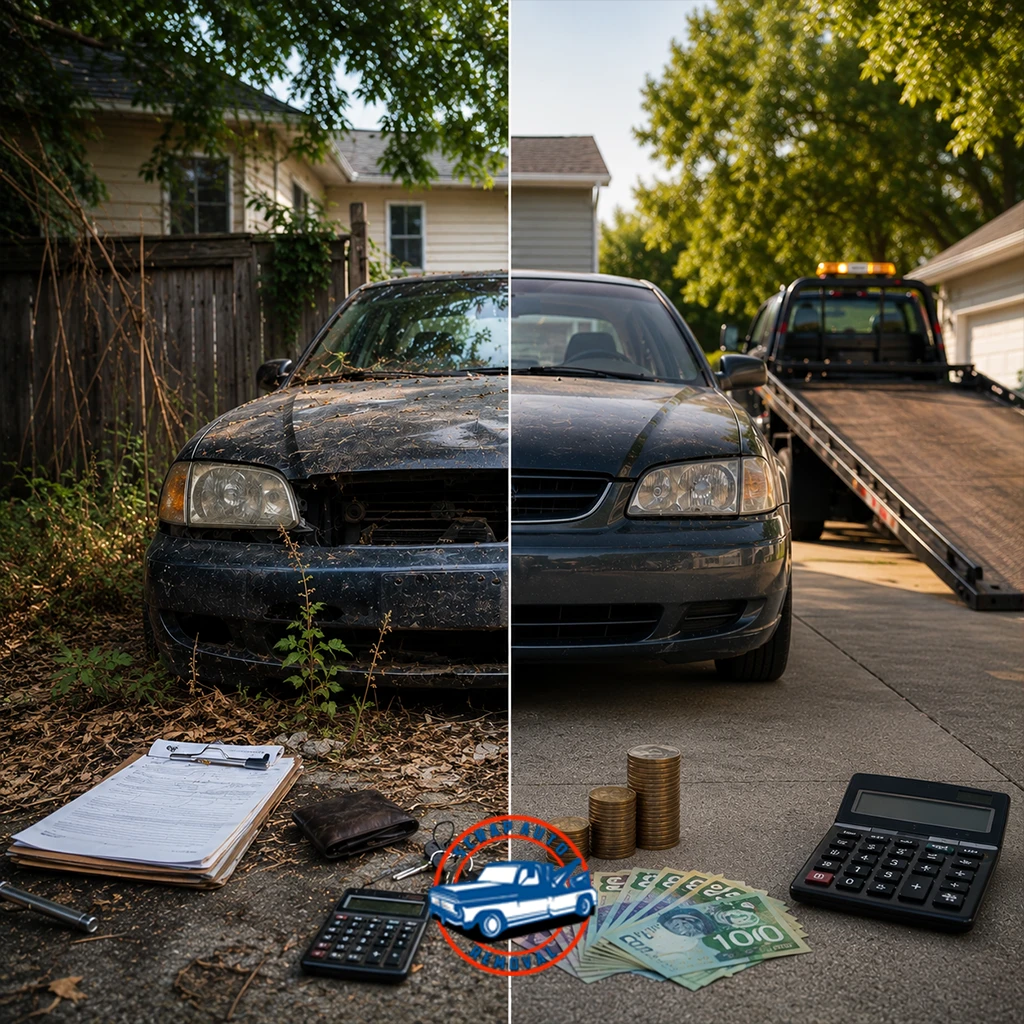
This is the point where online tools stop being of much help: a vehicle that’s very old, high-mileage, non-running, or carrying damage that puts it outside what a typical buyer is shopping for. We see this constantly, an owner pulls up an online estimate for a 15-year-old, high-mileage vehicle and gets a number that has almost nothing to do with what it’s actually worth once someone looks at it in person. At that stage, value shifts away from market comparables entirely and toward the vehicle’s actual condition, weight, and parts, which is a different kind of assessment than what a valuation tool is built to do.

If this describes your vehicle, a condition-based quote from a direct buyer will give you a far more accurate number than any online estimate. We’ve written a more detailed breakdown of exactly how that kind of offer gets calculated, worth a look if you want to understand the mechanics behind the number.

What to Have Ready When You're Getting a Real Quote

Whichever method you use beyond the initial online estimate, having a few things ready speeds things up and gets you a more accurate number the first time:

  1. Year, make, model, and trim. The basics every method needs as a starting point.
  2. Current mileage. Exact, not rounded, since it affects both online estimates and in-person quotes.
  3. An honest condition assessment. Mechanical issues, cosmetic damage, and anything not working as it should, disclosed upfront rather than discovered later.
  4. Service history, if you have it. Not required, but it can meaningfully support a higher number in a private sale or dealership appraisal.
  5. VIN. Needed for accurate online valuations and any in-person appraisal.
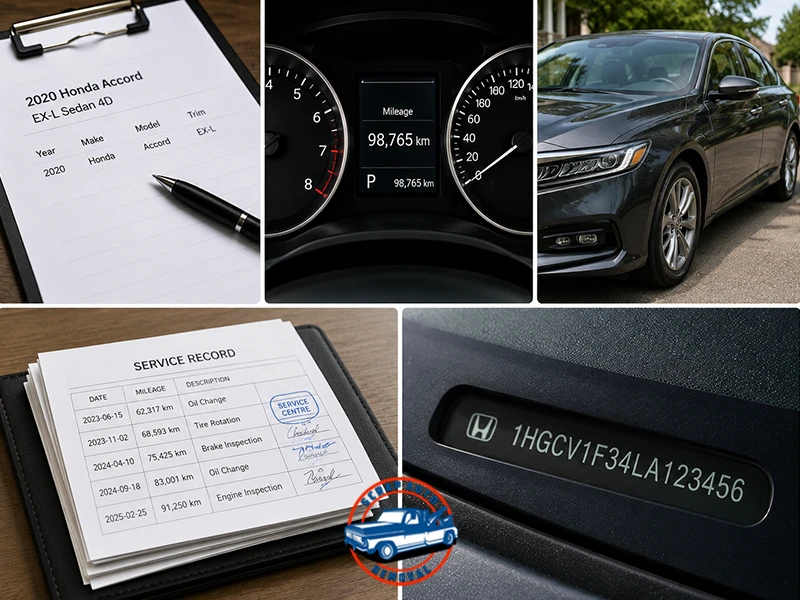
What to Have Ready When You're Getting a Real Quote

FAQs

FAQ - Older Car Value

These tools estimate value based on comparable listings and sales data. When a vehicle is common and in typical condition, there's plenty of data to work from, giving a tight range. Older, high-mileage, or unusual vehicles have fewer comparables, which widens the estimate.

Both matter, but they interact. A car with low mileage for its age typically holds more value than average, while high mileage accelerates depreciation beyond what age alone would predict. For very old vehicles, condition often matters more than either factor alone.

Not reliably. Online tools are built around market comparables of vehicles actually being bought and sold, and non-running vehicles fall outside that data almost entirely. A condition-based quote from a direct buyer gives a far more accurate number for a vehicle like this.

Trade-in value reflects what a dealership will pay toward a new purchase, factoring in their resale margin. Scrap value reflects a vehicle's metal weight and parts, used when a car is no longer viable to resell as a working vehicle to another driver.

Significantly, more than it does for a newer vehicle. Once a car is old enough that market comparables become unreliable, its actual mechanical condition, structural integrity, and functioning parts become the main drivers of value rather than year and mileage alone.

It depends on the vehicle. A dealership appraisal makes sense if you're trading in toward a new purchase. A direct buyer typically gives a more accurate, condition-based number for a vehicle that's too old, damaged, or unusual for standard trade-in evaluation.

The Bottom Line

Finding out what your car is actually worth in Canada starts with an online valuation tool, but shouldn’t necessarily end there. For a common vehicle in typical condition, the estimate is usually close enough to be useful on its own. For anything older, higher-mileage, electric or hybrid, or outside the norm, that estimate is really just a starting point, and the more reliable number comes from comparing it against real trade-in offers, actual local listings, or a direct condition-based quote. Knowing which category your vehicle falls into before you rely on a single number is what actually gets you an accurate answer, and it’s the difference between guessing and knowing what you’re actually working with.

References

Sources

  1. Canadian Black Book – vehicle valuation methodology, VIN-specific analysis, and data-driven depreciation approach
    https://www.canadianblackbook.com/vehicle-values/
  2. AMVIC (Alberta Motor Vehicle Industry Council) – vehicle condition disclosure requirements
    https://www.amvic.org/consumer/buying-a-vehicle/buying-used/
  3. Government of Alberta – Vehicle Bill of Sale form (ARP006)
    https://formsmgmt.gov.ab.ca/Public/REG3126.xdp
  4. BrokerLink – car depreciation rates and factors in the Canadian market
    https://www.brokerlink.ca/blog/how-much-does-a-car-depreciate-per-year
  5. AMVIC – general code of conduct and Consumer Protection Act obligations
    https://www.amvic.org/about-us/laws-and-regulations/general-code-of-conduct/
  6. AutoTrader.ca Price Index – Canadian used-vehicle market pricing trends, based on hundreds of thousands of monthly listings
    https://www.autotrader.ca/editorial/price-index/

Have a Vehicle That Standard Tools Can't Price Accurately?

If your car is too old, high-mileage, or worn for a valuation tool to give you a useful number, Scrap Auto Removal serves Calgary and more than 30 Alberta communities with real, condition-based quotes, no guessing involved. Get a quote or email [email protected] for a free assessment.

Next
Table of Contents

Share This Post

Lastest Post

How It Works

Request Quote
Receive Cash Offer
Accept & Schedule
Get Paid Cash

Michael Tremblay

Michael is a Calgary-based automotive writer with 8+ years covering Alberta’s used car and scrap vehicle industry, dedicated to giving readers simple, practical advice on selling their cars with ease.

Get Your Quote

Ready to Sell Your Scrap Car in Calgary?

Fill the form or call us. Most Calgary quotes are answered in under 5 minutes during business hours. Same-day pickup is available in all quadrants when you request before noon.

Our Blog Posts

Stay up to date with the latest car removal tips, scrap value trends, and guides for selling junk cars across Calgary and Alberta.
Scroll to Top